From the mother of an addict. My mother.

I tried to figure out a way to do this anonymously, but our stories are obviously way too similar.  So, with her permission, I am posting this essay from MY mom.  The mother of an addict (my brother).  If you haven’t read the first article I published on this series, please go read it first so you understand why I’m posting these.

This was NOT easy for her to do.  And I would feel guilty for asking her to do it, but I feel strongly about the importance of this topic.  I think her truth deserves to be heard.   And much to her dismay, I’m very good at persuading her to do things she doesn’t want to.

I am fiercely protective of my mom.  Doing things like this is incredibly difficult.  So please keep that in mind when making judgments or comments.  I will delete ANY comment that is unkind in any way.  It’s my blog. My rules.  And MY mom who I love in the deepest part of my being.  I realize we open ourselves up as a family by posting these personal and vulnerable articles.  But again, I believe in this.  So we’re doing it.  Please be respectful and keep in mind you are getting very small parts of our story that are sometimes out of context and can be easily misunderstood.

If there is one thing that has been harder than any other as we have waded through the murky waters of addiction, it is the direct and painful impact it has on my parents.  Years and years and years (and years) of anguish. Mental, emotional, and physical.  But they have never given up on him.  Ever.  Which has taken its toll.  Though my brother is currently sober, the repercussions continue.  Most of my anger and sadness has come through watching my parents suffer.

My parents are brilliant, loving, kind, and generous.  They parented each of their kids differently (as all parents do) and they did the very best they could with what they had.  The choices my brother made were HIS choices and are in NO WAY a reflection of their parenting.  I hope I never have to know what it’s like to be the parent of a child who struggles with addiction.  It’s been hard enough being the sister of one.

I hope these articles will at least open doors for people to feel safe talking about addiction.  No shame.  Just truth.

Words from the mother of an addict:

IMG_0210

“One night in mid-June 2011, very late in the evening, there was a quiet knock on our front door.  I hesitated, waiting to see if it came again.  It did.  I checked to make sure my husband was close by, turned on the outside light and opened the door.  There stood two very young-looking uniformed female police officers.  “There has been an accident,” one of them said.  Immediately my mind and body went cold-fear numb.  I invited them in. They informed us that our son had been hit by a car as he had been crossing a dimly-lit highway on foot, and had been taken to Intermountain Medical Center, alive but critical. Any questions we asked for clarification were answered with “that’s all the information we have.”

     About a half hour later, we arrived at the hospital where one of our daughters had already arrived, and had ascertained that our son was soon to be taken to surgery.  Somehow we got to where he was.  He was almost unrecognizable.  He was bruised and swollen, and there were multiple beepers going off and tubes everywhere. The smell of body odor and alcohol was overpowering.  His eyes were open and I thought I saw a flicker of recognition in them as I took his hand.  There was a flurry of activity as we arranged for a rapid priesthood blessing.  And then he was wheeled away to the OR.

     By then our other daughter had arrived.  It took a while to find our way through night-time hospital security to a room where we could wait for the promised ‘two hours or so’ of surgery.  Someone brought us blankets.  When the sun came up several hours later, we were still waiting.  Finally, a tired surgeon appeared and described the intricacies of repairing a shattered leg.  It had received  primary attention because apparently time was critical in obtaining at least a hope of proper healing.  There were multiple other injuries and management of everything was being compromised by total-body alcohol saturation.  My own personal numbness continued.  I kept thinking, ‘please wake me up from this bad dream.’  Over and over along our way through this maze came the pronouncement, “He is so lucky to be alive.”  Really?

     I was so incredibly tired.  Not surprised.  Very, very sad—again.  Still there were no tears.

     For the next three weeks our family kept an almost 24/7 vigil with our son in the shock-trauma unit at this beautiful state-of-the-art hospital with its knowledgeable, caring staff. Besides being a management problem physically, our son was almost impossible behaviorally.  Three or four days into it, my numbness took a long-overdue hike and the dam broke, so to speak.  I couldn’t stop crying. I had thought over the previous innumerable years of tear-shedding that they were all gone.  Not so.

     The time for discharge came.  Because our son was uninsured, no interim rehab facility would take him, so he and his badly broken mind and body came home where the 24/7 vigil continued—as did the tender mercies.

     Fast forward three years..

     Our son has lived with us since his accident.  For the most part, his broken bones have healed remarkably.  His brain damage lingers, but is so much less than at first feared, and is manageable. The great retrospectoscope  is an invaluable aid in providing possible meaning and purpose to the challenges inherent in life.  With the fallout from addiction come innumerable what-ifs and whys . Like, how did I miss this?  Why wasn’t his mental illness diagnosed sooner?   Why was this kid so different from our others, right from the get-go?  Will this ever end?  How is it going to end? And, oh the guilt. Also, what about the collateral damage to our son’s siblings and their need for equal time, to our marriage, to the sanctity of our home, to our daily activities, our personal freedom, even our mental and physical well-being? I have had as a personal goal that I do not want to be defined by my son’s addiction.  How is that even possible?

     What about all the money that has been spent on failed rehabs, and the promises, and the relapses, and the months, even years, in jail?  How could I walk down that long, scary hall in that horrible, cold building yet another time and try to be encouraging through a stupid glass when I couldn’t  hear over the people who were fighting next to us?  What about trust?  Ha! When will the next rehab, the next accident, the next arrest, be?  How many times will this man/child knock on death’s door and be declined admittance?  Lucky to be alive?  Really?

     Since the accident, for the first time in at least 25 years we are seeing our son’s true alcohol-and-drug-free personality.  We so lament that he has lost so much time and life-experience as his life-course has taken him into the world of darkness, halted-progress, fear, filth, homelessness, purposelessness. That’s a lot to overcome.

     Assuredly, it is more than luck that our son is still alive.  Once, over a particularly long period of out-of-control using and prolonged despair-causing and havoc-wreaking, as I was petitioning (questioning?) the Lord yet again, I said something like, ‘why did you send us this kid?!’  His response was, “Because I knew you wouldn’t give up on him.” Chagrined, I knew then, and still know now, it is obvious that our son has not yet filled the measure of his creation.

     By virtue of my age, I am getting closer and closer to filling mine.  This is what I have learned:

Everyone matters.  Each of us needs to know that.  When we do not, some may seek destructive alternative methods to compensate.  God loves every living being in His universes all the same—no matter what we do.  And we—I—need to follow His Son’s example.  I am so grateful for family and friends through the years who have stood by my son and for the most part withheld judgment and scorn,  and have tried to help, and at the very least, offer encouragement. There are plenty of negative, vocal judges out there.  I don’t want to be one of them.  And because of my son, I have seen the world and its people through new eyes.  Satan is real, and his methods are rampant and devastating. He has an incredibly effective tool in alcohol and its addictive cohorts, and he seems to be rapidly gaining ground.  Somehow I want to be part of the force for good that stems that tide, maybe just by mothering one of God’s sons who is wobbling.

     In my searching, I have found there are many people and agencies out there trying to make a difference.  Alcoholics Anonymous, certainly, and the LDS Church Addiction Recovery program which is growing in numbers and success.  Mental health diagnosis and treatment seem to be inadequate in comparison to the need. In the midst of all the questions, this big one looms:  what do you do with someone like our son? To many of the questions, there are no answers—yet.  I continue to be watchful and hopeful, and more aware than ever.

     Perhaps the biggest, hardest lesson I have learned is addictive behavior will never be re-directed until the addict decides to do it.  All the promises, the money, the time, the grief are for naught until that decision is made by the addict.  Then the work begins.  And there is always and forever the threat, and possibility/probability of relapse.  It has given me some relief when I remember a quote from the recovery meetings:  “I didn’t cause it. I can’t control it. I can’t cure it.” Someday I hope to get rid of the guilt.

     I sometimes question the wisdom of people who say they are grateful for their adversities, almost saying ‘bring it on.’ I won’t go that far about our addiction experience. But I am grateful for my son and all that I have learned from him.  I am so grateful to his sisters and brothers whose worlds have been challenged, interrupted and blessed by his presence in our family.  And for my husband who has been the glue and the voice of reason through the trauma. And to the Lord Jesus Christ whose atonement covers even guilt.  And ultimately to my dear Father in Heaven who has patiently endured my incessant whining, and has shown me the way and provided comfort through earthly and heavenly angels.”   


Thank you Mom.  You are brave beyond words and I wouldn’t be who I am or where I am without you.  I love you.      

If you’re interested in reading more articles from this series written by people who love an addict, you can go here.

Waging a war on Excess

The past few months I have read 3 excellent books that discuss the topic of having too much stuff.  And it has motivated me to wage a war on excess in every area of my life.   For several reasons.  I want to give more.  I also want to DO more.  And I want to quit picking up crap all. day. long.


The first book is More or Less: Choosing a Lifestyle of Excessive Generosity by Jeff Shinabarger.

31oO68wwDmL._AA160_

More or Less is the first book I read about the idea of excess and having far more than we need.  And it was this book that initially sparked my desire and awareness to BUY less and DO more.  Sometimes it’s all our stuff that gets in the way of our being able to do more.  And it all starts with the question “What is enough?” A few quotes from the book (among many) that I loved.

“Excess is that thing we could give away today, and it wouldn’t change a single aspect of our tomorrow.  Excess is more than what we need–and in turn it may be exactly what someone else needs.  Anything more than enough is excess.  Excess is margin.  Excess is more than enough.”

“Many of us don’t want our stories to end with just an understanding that we have been given much.  We want to do more with what we have; we just don’t know how to combat a culture that defines so much of what we think we need.”

“The sad truth is that while others fight for survival, we all want a little bit more.  When we get more we tend to spend more, which results in wanting more.  Meanwhile, we throw away what others need for survival.  It’s a disturbing circle of want and need, but we have the ability to change the cycle.  The change beings when we acknowledge that our excess creates an opportunity to address the needs of others.”

“I must create new habits that challenge my view of enough by forcing me to look through the lens of the suffering and therefore cause me to reexamine my personal lifestyle of excess.”


The second book is 7: An Experimental Mutiny Against Excess by Jen Hatmaker.

41FN+0d+3oL._AA160_

This is the first book I’ve read by Jen Hatmaker and I’m a HUGE fan.  I’m pretty sure if we lived next to each other we’d be really good friends.  We think a lot alike.  7 is a true story of how Jen (and her husband and kids) waged a war against excess in 7 areas of their lives over a 7 month period.  It was fascinating, hilarious, and inspiring.  One of my favorite books I have read recently.  A few quotes I loved:

“I’m trapped in the machine, held by my own selfishness.  It’s time to face our spending and call it what it is:  a travesty.  I’m eary of justifying it.  So many areas out of control, so much need for transformation.  What have we been eating?  What are we doing?  What have we been buying?  What are we wasting?  What are we missing?  These questions grieve me, as well they should.”

“My children are young–still entirely impressionable.  It is not too late to untether them from the lie of ‘more'”

“I’m going to bed tonight grateful for warmth, an advantage so expected it barely registers. May my privileges continue to drive me downward to my brothers and sisters without. Greater yet, I’m tired of calling the suffering “brothers and sisters” when I’d never allow my biological siblings to suffer likewise. That’s just hypocrisy veiled in altruism. I won’t defile my blessings by imagining that I deserve them. Until every human receives the dignity I casually enjoy, I pray my heart aches with tension and my belly rumbles for injustice.”

“I could blame Big Marketing for selling me imagined needs. I could point a finger at culture for peer pressuring me into having nicer things. I might implicate modern parenting, which encourages endless purchases for the kids, ensuring they aren’t the “have-nots” in a sea of “haves.” I could just dismiss it all with a shrug and casual wave of the hand. Oh, you know me! Retail therapy! But if I’m being truthful, this is a sickening cycle of consumerism that I perpetuate constantly.”

“We top the global food chain through no fault or credit of our own. I’ve asked God a billion times why I have so much while others have so little. Why do my kids get full bellies? Why does water flow freely from my faucets? Why do we get to go the doctor when we’re sick? There is no easy answer. The why definitely matters, but so does the what. What do we do with our riches? What do we do with our privileges? What should we keep? What should we share? I better address this inequality since Jesus clearly identified the poor as His brothers and sisters and my neighbor.”


The third book is Living Well, Spending Less: 12 Secrets of the Good Life by Ruth Soukup.

51vZLYy2DKL._AA160_

I had the opportunity to read this book before it was released to the public (it’s officially released on Monday, December 29th).  And I quickly decided reading and critiquing pre-released books would be a job I definitely wouldn’t mind.  This book wasn’t what I expected, in a good way.  It was full of substance, hope, and inspiration to take control of life.  Ruth writes regularly on her blog Living Well Spending Less and she is a good woman with a good heart.  A few quotes I loved:

“It is not the wealth–or the stuff–that kills us; it is the wanting, the longing, the absolutely insatiable desire for wealth, possessions, power, and status that eventually take over our hearts and minds, leaving room for little else.  Whether or not we can afford it is totally irrelevant.  What matters is the desire of our heart.  Regardless of the never-quite-enough message society wants to give us, a live consumed by always wanting more is not the Good Life.”

“Discovering the Good Life is not just about learning to spend less, but about actually changing the desires of our heart, shifting our priorities from wanting and hoping for the best of everything in this world to deeply longing to store up differing kind of treasure.”

“I have found that overturning a lifetime of consumption while the rest of the world still screams at me to keep wildly spending does not come without hard work, serious soul-searching, and lots and lots of intentional prayer.  I have fervently and frequently prayed for God to change my heart, to lead me where he would have me go, and to take away my desire for the things of this world.  I’m still praying that prayer.

It is a terrifying prayer because, quite frankly, I love the things of this world.  I’m not eager to give up my nice house with its loverly decorations, granite countertops, and 600-thread-count sheets.  Storing up treasures in heaving is all well and good, but I still want to drive a nice car, wear nice clothes, and continue Instagramming all my social-media-worthy moments on the latest version of the iPhone.”


I’m determined to spend the next few months putting in the work to de-clutter our home.  To give away things we don’t need.  To get rid of things that don’t bless and enhance our lives.  And to quit bringing in more things we don’t need.  Room by room.  Cupboard by cupboard.  Drawer by drawer.

I’ve already started this the past few months (I can only do a little at a time or I get overwhelmed and apathetic) and my kids aren’t quite as excited about it as I am.  Whenever Carter (who is 5) can’t find something of his now, he starts to wail and says “You gave it to the homeless shelter.”  Most of the time he’s right.  Or I put it in the garbage and hid it under a paper towel.  Because he hasn’t cared one bit about it for the past year.


The truth is, getting rid of or giving away things we don’t need (or use) opens up space for us to do things that really matter.  And spend money on doing things together instead of stuff strewn about the house.  And finding resources to help people who need the help.


I love this quote by mother Theresa.  We can pray for God to change things.  But the truth is, change comes from us.

Lindsay quote 31

I’m waging a war on my personal excess and a change of heart.  And I’m determined to stick with it.

Weavesleeves and Kickstarter

If there’s one thing I can get behind, it’s a company whose intent is to help people.  And that’s exactly what the founder, Andy, of Weavesleeve is trying to do.  To help the artisans in Guatemala preserve their culture.  And help consumers by giving them a minimalist product that is functional and has personality.


3e38644b2d53d144281f156e752843d5_large

2014-12-20_0008

The story behind the Weavesleeve is what I love.  And the heart of why the company started.

In Andy’s words:

“During one of my visits about two years ago, I was spending time with some Guatemalan families I’ve grown close to and we began talking about weaving. All the women in these families know how to weave, but when I asked if they were teaching their children none of them replied in the affirmative. They simply said that it wasn’t profitable to weave and their time was dedicated to doing other things that could provide a living, so they hadn’t passed on the tradition to their children by teaching them.

When I left from that visit I thought long and hard about that conversation. It was troubling to know that the Guatemala that I knew and grew to love over a decade ago was changing, and that a country so culturally rich was in danger of losing that uniqueness.The wheels in my head started turning, trying to come up with something to help preserve their culture.

Over the last two years, I have made several trips to Guatemala specifically working on a way to help these people sustain themselves by weaving. I realized that selling unaltered pieces of handwoven textiles or table runners wasn’t going to be the answer. I needed to reach a larger demographic, and that’s where WeaveSleeve stemmed from.  We take their handwoven art and transform it into handwoven sleeves to carry around everyday things.

Not only do WeaveSleeves help preserve a culture, they also help to show off each person’s own uniqueness. By offering over 50 color choices, you can finally carry something with you every single day that more closely fits your own style.”


b186452718d80c6db6a31bf961584ffd_large

2014-12-20_0003

You can watch a short video about Weavesleeve here.


Weavesleeve is currently ONLY found on Kickstarter.  Haven’t heard of Kickstarter?  Another thing I LOVE.  Kickstarter is a space where entrepreneurs can bring their ideas to life.  They launch a campaign on Kickstarter with a product they want to provide to the public.  And they can give it a “test drive” on Kickstarter.  To see if people like it.  If it’s a company/dream/goal/product worth pursuing. They start by choosing a funding goal–how much money they want to raise.  And then people can “back” the product by pledging to donate a certain amount of money.  But you don’t get the product and your card is never charged if the funding goal isn’t met in the designated time.  If you love the product, it motivates you to get other people to back the product as well.


2014-12-20_00072014-12-20_0002

The great news about Weavesleeve is the funding goal has ALREADY been met.  Which means a.) people want it! and b.) now everyone who “backs” the product will get the reward! (on whatever level you “back”).


Devin Graham, also known as Devin Supertramp, is a video-making ninja (seriously, check out his videos on Youtube–they’re insane). He sent a few of his team members with Andy to document Guatemala and some of the artisans making the Weavelseeve.  You can watch those videos below:

A behind the scenes video.  I love behind the scenes stuff.

Devin’s main Guatemala video.  That place is beautiful.  I should probably travel there someday.

And this one is just fun.  Andy takes some of the Guatemalan artisans to their first amusement park.


I read a quote by Donald Miller that I think of every time I see a good guy trying to sale stuff.

“I don’t want to be a salesman, but I also don’t want to forfeit the public square to snake-oil salesmen.  I honestly think more good creators should sell more of their stuff as a way of helping the good team take more ground.”


This, my friends, is good stuff and it helps the good team take more ground.  You can read all about it and get yours on the Kickstarter website today!

Are YOU living an energy efficient life?

I like to think that I have some pretty awesome friends who dream big and who take action to make those dreams come true.  And things like this just confirm my belief.  My friend did a TED talk.  A TED talk.  If you don’t know what TED talks are, they’re a big deal.  The best of the best speakers do TED talks.  And talk about “ideas worth spreading”.  And their talks change people’s lives.  And make the world a better place to live in.

Jenna and I managed a restaurant together.  Which were some incredibly fun, yet super challenging years of my life.  We’ve been through a lot together.  A whole lot.  We also played (play) soccer together.  And we laugh.  A lot.  She’s funny, smart, kind-hearted, and incredibly generous.


I knew it was a goal of hers to do a TED talk.  And then a few days ago I got the text.  The one that linked to her dream.  Her TED talk.  To say I’m proud of her would be an understatement.  And even better than fulfilling her dream, she gave a killer talk that applies to most humans I know.  And definitely applies to me.  And I’m determined to make some changes to live a more energy efficient life!


tedtalkpin

Well done, my friend.  Well done.

And, I had the opportunity to read the book “Living Well Spending Less:  12 Secrets of the Good Life” before it gets released (you can preorder the book by clicking here: Living Well, Spending Less It’s a good one!  You also get a pre-order bonus.  And I have decided reading books and offering feedback before they’re published is a job I’d totally be okay with.).   I’ll talk more about the book in a later post, but I found some similarities between this TEDx talk and Ruth’s book.  The biggest similarity being the idea of WRITING DOWN and establishing daily routines and habits so we can live a more energy efficient life.  If we dream big enough, our dreams are going to take some serious energy.  So if we want to make our dreams come true, we must find ways to increase our energy.  Being the mom of four young, energy stealing kids, I could most definitely use ways to find more energy.  Especially ones that don’t involve toxic doses of caffeine.

The first step in doing that is writing down our routines, our goals, and the habits we want to form.  And then taking action on what we wrote down.


A few quotes from “Living Well Spending Less” by Ruth Soukup that support living the lives we dream of:

“I lacked a clear direction and focus, and as a result I was wasting far too much time on the things that didn’t matter at all, and not finding any time for the things that did.”

“What would happen if we took the time to actually write down our current priorities?  How would our perspective change if we took just a few moments to determine what it is we want most out of life?”

Writing down our goals and focusing on doing those first makes all the difference “living life to the fullest and just getting by.”


“The happiest, most successful, and most fulfilled people I know DO have a secret road map for their lives.  They’ve taken the time to visualize what their lives would look like if nothing stood in their way.  They’ve given themselves enough freedom to dream about the future, and that dream gives them enough confidence to figure out a way to get there.”

“It is not enough to have a vision in your head of what you wish your life could be.  It’s not enough to have some vague semblance or hazy daydream of what you’d like to accomplish someday.  You have to actually take the time–whether it be five minutes or five hours–to write it down.  Taking the time to write down your vision of the future not only forces you to self-evaluate and to decide what is most important, but it also motivates you to act on those dreams.  Writing them down makes them real.  And once they are real, you can’t ignore them.”


“You have to know where you want to go before you can know how to get there.”


“What if self-discipline and time management skills are something that can be strengthened over time?  What if self-control is not an innate character trait bestowed on a select few, but something we all need to develop?  What if willpower is actually a finite quality, one that runs out over the course of the day?  Wouldn’t that change the game?  Wouldn’t we want to be sure we used our energies well?”

“How would your life be different one year from now if you were willing to take the first thirty minutes of your day to work only on long-term goals?”


“I realized that creating good habits was the key to being able to get things done.  The more good habits I could create for myself, the more willpower and mental energy I would have left over to pursue my dreams.”

“What would happen if someone else were to observe how you use your time?  Would your long-term vision be immediately apparent?  Does the way you use your time clearly reflect what is most important to you?”


I’ve read my fair share of self-help books.  And books about business.  And books about success.  And books about living your dreams.  And books about creating a better life.  And one thing nearly every one of the authors from those books talks about is the importance of writing down our goals, visions, and ambitions to live a better life.  And then taking action on what we write down.  We have to dream.  We have to write it down.  And then we have to act.


Here’s to living a more energy efficient life.  I feel so “green” just typing that.

A morning with a homeless man, and thoughts on food banks.

A woman named Kelli, who I do not know, but follow on Instagram, recently launched a campaign called TIME=LOVE.  It encourages us to just give people our TIME which in turn shows them our LOVE.  Isn’t that so true?  In conjunction with this campaign, she posted a story about a man she met.  His name is Al.  This story shook me.  To the core.  Because I still have so far to go.


She said:

“A few months ago, I noticed a man sitting outside of church–on the same bench–week after week. You know that feeling you get deep down inside….that prompts you to do something that you’re not always comfortable doing?! Yea, well that happened.

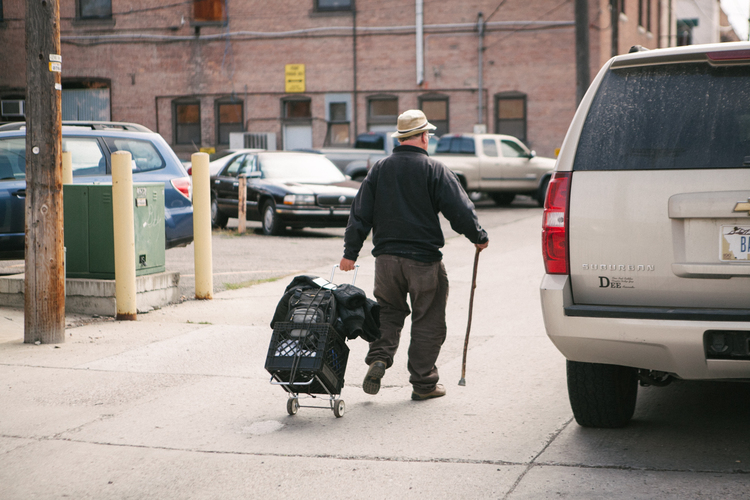
So, I walked up to this man who was sitting on the bench, with what seemed to be all of his personal belongings stuffed tightly in plastic crates, wrapped with bungee cord. I introduced myself and conversation grew effortlessly. His name was Al. And Al was awesome. His laugh was infectious and his love for people and Jesus was so inspiring. I walked away thinking he is the epitome of “Even though……I will” Whatever those dots represent between those words [I have no money, Lost my job, Living on the streets]….I WILL get back up. And getting back up meant small steps like getting to Church every single weekend. That was inspiring to me.”

static.squarespace

(photo credit:  Kelli from kelliandvanessa.com)

My favorite line:  “You know that feeling you get deep down inside….that prompts you to do something that you’re not always comfortable doing?!”  I’m pretty sure it’s following those feelings that always leads to things we could never imagine.  Things that change us.


It’s one thing to raise money for the homeless, visit the places they live, say hello to them on the street, and give them money or food or in-kind donations.  It’s an entirely different thing to stop, have a conversation with them, and give them our TIME and complete attention.  To show we really care about who they are and what story they have to tell.


After reading about Al, I realized my heart still needs a lot of changing.  And my willingness to be uncomfortable needs some definite work.  I found myself wondering if I would have done the same in that situation.  First of all, would I have even noticed Al?  And, would I have stopped to talk to him?  Like, really talk to him?  And ask about his story?  Unfortunately my answer was “probably not”.  I need to change that.

You can read the entire article here.  It’s worth it.


And on a sort of related note, I read an article about making donations to food banks that totally changed my perspective.  Because I am completely guilty of being the person who donates whatever I just want to get rid of.  Things we never got around to eating.  Not putting much thought into the fact that there are people whose lives literally depend on the food donated to food banks.


Take a look at this article before you make a donation to your local food bank.  It may change your mind about thoughtlessly throwing things in a bag or bin to make you feel like you’re making a difference.  And it has great ideas on things they actually need.


Related Posts Plugin for WordPress, Blogger...