7 mistakes you’re making managing your photos (and how to fix them!)

Recently I surveyed some of my readers and e-mail subscribers and asked “What emotion do you first feel/think of when talking about the photos you have?”

Over 75% of the responses were one of the following:  overwhelmed, guilt, stressed, frustration, anxiety, discouraged, regretful, or fearful.  Less than 25% had a positive emotion when first thinking of their photos.

My guess is if you had a house fire, a flood, or had to hurry and save ONE thing from your home, 99% of us would run to save our photos (no idea what that other 1% would grab but they probably have hearts of stone–I kid–sort of).

Photos are unarguably one of our most prized possessions.  One thing we cherish more than just about anything else.  And yet, when asked what emotion people feel, the answers are largely negative.

Why?

Well, I would say it’s because we’re managing our photos wrong.  Because if we’re doing it right, our photos shouldn’t cause us to be overwhelmed, anxious, regretful, fearful or any other negative emotion.

Here are 7 mistakes I see people make when managing their photos AND how to FIX those mistakes.


MISTAKE NUMBER ONE.  Feeling overwhelmed/guilty (or any other negative emotion).

Look.  I get it.  Our generation is taking more photos than any other generation in the history of the world (granted, cameras haven’t been around that long, but still, stick with me here).  So. many. photos.  Thousands upon thousands upon thousands of photos.  And we keep taking more so the so-called problem just keeps getting bigger and bigger (and bigger).  I’m a professional photographer.  I know what having boat loads of digital photographs look like.  I have well over 100,000 personal photos just from the past 10 years.

My goal is to help people take small steps to manage their photos better so we can take away the overwhelm and guilt.  Because we have enough overwhelm and guilt as it is.  Our photos shouldn’t add to that.  They should make us feel joy.

We’re taking photos.  And that right there is a step ahead of generations before us.  We have the tools to photograph the stories of our lives and we’re doing that.  So let’s cut ourselves a little slack.  I don’t have a baby book full of photos.  I don’t have a bunch of albums documenting the stories of my life when I was younger and I’m just fine.  Would I love to have those–of course.  My point is that sometimes we’re a little too hard on ourselves about things like these.

Keep taking photos and enjoy the process.  Remember why you’re taking them in the first place.  Cut yourself a little slack and try to get rid of the guilt.  And then do your best to take small steps to get a better handle on your photo managing process.  Because you CAN.  There are ways to manage the photos and create systems so we can enjoy the photos we’re taking.
2015-03-14_0024

MISTAKE NUMBER TWO.  Photos are on multiple computers/devices.

Managing photos on one device can be hard enough.  Having photos spread out over multiple computers, and on multiple devices (phone, iPads, tablets) can be a downright nightmare.

Get all your photos on ONE computer.  Just one place to manage all the photos.  If you don’t have room on your computer for all of the photos (I certainly don’t) put some of the photos on an external hard drive that you can connect to the main photo managing computer.  I keep the few most recent years on my computer, the rest are on an external hard drive (in my case, multiple external hard drives) that stays connected to that computer (for backing up reasons which we’ll discuss in a minute).

Load all the photos from your phone, tablets, and SD cards (oh sweet mercy don’t leave photos on SD cards without putting them on your computer) onto that photo managing computer as well.  Set a reminder in your phone to do this at a set time each week.  Just plug your phone (and SD cards) into the computer and get them on there.  That way when you run out of space on your phone (pretty much a daily occurrence for most people), you know the photos are already safe on your computer so you can delete them from your phone.


MISTAKE NUMBER THREE.  Photos aren’t backed up.

On the same survey I mentioned before, I also asked my readers (who are on my e-mail list) if they had a solid system for backing up their photos so they KNOW they are safe.  Nearly 60% said “NO”.  And another 30% didn’t have a fail-proof system in place.  When I saw those results a small piece of me died inside.  You guys.  YOU NEED TO BE BACKING UP YOUR PHOTOS.  It’s not IF your hard-drive will crash.  It’s WHEN your hard-drive WILL crash.  Trust me on this one.  It will crash.  If it hasn’t yet, consider yourself super lucky.


Let me tell you a little story about the Ross family hard-drive crash of 2015.  It has 2 parts.  Because two things crashed.  Lame.

We found an external hard-drive in the bottom of a drawer.  I had no idea what exactly was on it.  I plugged it in and…..nothing.  Just a weird clicking sound and no matter what computer I plugged it into, it wouldn’t pull anything up.  So I called my ever reliable computer guy for help.  “Hellllp me”.  He took the hard-drive and quickly realized it was something beyond what he could fix.  He sent it off to a lab where people wear special white coats and gloves (or someone’s basement–who really knows) to see what they said.

At first, they said they couldn’t recover anything.  He pushed and asked them to find a way.  They came back and said they could recover about 55,000 jpegs (solid work Kevin).  I still had no idea what was on there and wouldn’t know unless I told them to go ahead with the recovery.  Talk about a gamble.  There was no guarantee and I still didn’t really know what they’d find.  But I was too scared NOT to recover the photos.

The kicker–it was going to be $1200 to do it.  I don’t know about you, but that’s a LOT of money for our family.  But I had an idea that the photos on there were the first 4 or 5 years of our little family’s life (my photos weren’t organized or sorted at this point so I wasn’t totally sure).  If I was right, that was our first years of marriage, our first home, the birth of our first two kids and the first few years of their lives.  Pretty important photos if you ask me.

We went ahead with the recovery.  And sure enough, there were over 50,000 photos on there of a lot of really important years in our family story.  I don’t really know if they recovered everything.  Hard to tell if I didn’t know what was on there in the first place.  But they recovered enough.  I wasn’t regretful about spending the $1200 to recover the photos.  I was regretful I hadn’t taken the right steps in the first place so I wouldn’t have to pay for that type of recovery in the first place.

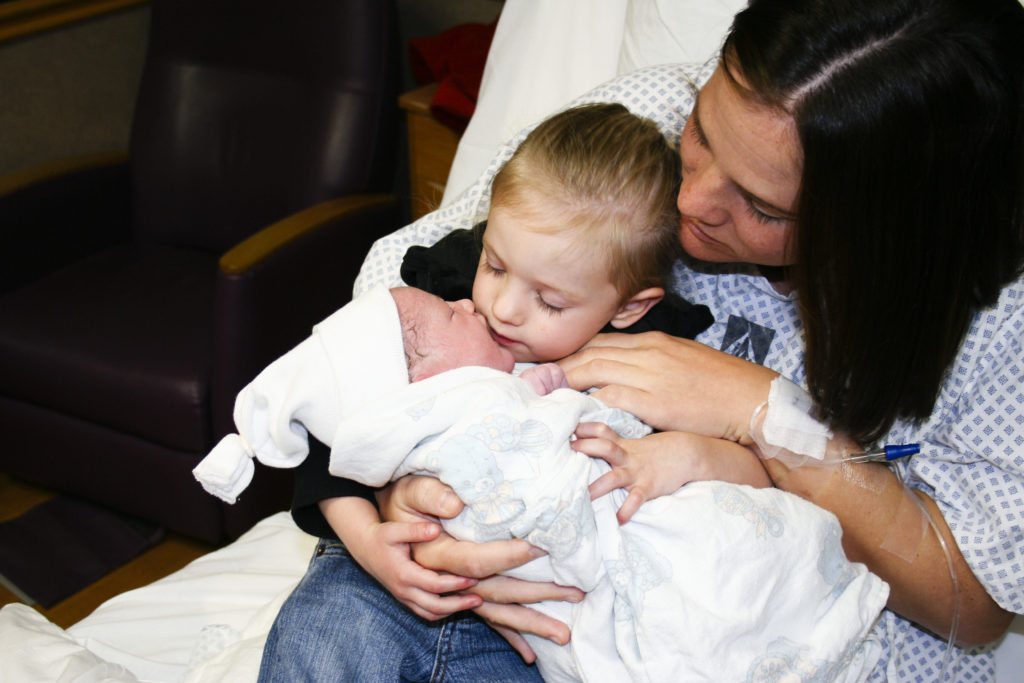
(one of over 50,000 photos we would have lost had we not paid a boat-load to recover them)
IMG_7223_1

Fast forward 6 months when my main computer hard-drive unexpectedly quit one day.  It would turn on for about 30 seconds and then crash and give me all sorts of weird, discouraging messages.  Long story short, this hard-drive was dead too and because of the way it happened, they weren’t going to be able to recover a lot of what was on there.  Thankfully at this point, I’d learned my lesson.  I knew what photos were on there AND I had all those photos backed up.  (There were a few things I wasn’t doing right that would have made the recovery a lot easier which I go into detail on in the Back Up your photos PDF download–more info below–but I still got all the photos back).

I recovered all my photos using my online backup service, Backblaze (my personal recommendation for online backup).  Still a bit of work to get everything back, but when my hard-drive crashed, I wasn’t in the corner in the fetal position because I KNEW my photos were backed up (well, there was still a little bit of worry just in case I had done something wrong and they weren’t all backed up–glad to find out I didn’t and now I know for sure how to do it right).

The point.  If you do nothing else, please, please, PLEASE back up your photos.

I put together a Back Up Your Photos PDF you can download (it’s totally free–I seriously just want you to get your photos safe) with a checklist to make sure you have your photos backed up in the best ways possible so if one things crashes, you still have a way to recover/access all your photos.  It’s a simple checklist (nothing complicated) you can look at, follow, and feel better that your photos are safe even if you aren’t doing anything with them–yet.

Just enter your name and e-mail in the spaces below and I’ll send the checklist right over to you!  (If you aren’t already on my e-mail list, you’ll just need to confirm your e-mail address before the PDF gets sent to you–check your spam if you can’t find it).  Please please please (a million pleases) do this step.  Get your photos backed up!!!!


MISTAKE NUMBER FOUR.  Randomly taking photos without a clear vision of what stories we’re trying to capture.

We’re a snap happy generation.  Taking soooooo many photos.  And then the photos fill up our phones and our hard drives and just…..sit there.  We have no vision for what we’ll do with them.  No vision for what stories we’re actually trying to capture.  No plan for how we’ll preserve them or share them.  We’re just takin pictures to take pictures.  Sure, we’re “capturing memories”.  But are we really?  Are we preserving the stories that matter most?  The ones that make up our lives?  The every day things?

Or do we just have a bunch of random photos of random events or holidays and nothing that really captures the stories of our family’s?

The best tip for photo taking:  “Begin with the end in mind” (thank you Stephen Covey for this gem that applies to pretty much every aspect of life).  WHY are you taking these photos in the first place.  Who are they for?  What are you trying to show/remember/preserve?  What are you going to DO with the photos?  What do you want your kids, grandkids, posterity, relatives to see?  What do you want to be able to look back on in the future?

You probably don’t want to look through 50 albums of your grandparents or parents life.  But you certainly want to look through some.  What type of things would you want to see?  What type of pictures would tell you what kind of person they were and what kind of life they lived?  Picking the right photos to take and the right ones to preserve is a skill (it’s totally a skill) you acquire the more you do it.

Knowing WHY you’re taking the photos is the start.  Knowing WHAT type of pictures to take is the next step.

If you want some guidance on the TYPE of photos you may want to consider taking, check out the Every Day Photos guide to help you capture the stories of your family.  These are the type of photos I don’t want to delete or lose. The ones I intentionally take and preserve for generations to come.


MISTAKE NUMBER FIVE.  Keeping every.single.photo you ever take.

Now that it’s so easy to take photos and nearly all of us literally have a camera in our pocket with us at all times, the photos are piling up.  And one thing I hear over and over and over “I’m scared to delete any.”  This, my friends, is a fear we need to get over.

The biggest tip I can give you on this topic:  Delete as you go and be picky about the ones you keep!  If you take a blurry photo or a photo you didn’t mean to take, or a burst of photos, pick the BEST one(s) and delete the rest.  You don’t need 80 photos of your cat playing with a ball, or your kid licking the hose, or your son/daughter trying to hit a baseball, or a bunch of random selfies your 2 year old took.  Pick the best one (the right one) and delete the others.

Keep the photos that:  tell a story, show emotion, show who the person is, or the ones you emotionally connect with.  The ones that really matter to you.

Keep the ones that fit into your “why” of taking them (keeping the “end” in mind) and delete the rest!  Trust me on this.  You’ll get better at it, the more you do it.  And if (I mean when) you start doing something with the photos (i.e printing them so people actually get to engage with the memories) you’ll get even better.  You’ll quickly see which photos are worth keeping and which ones are okay to get rid of.

I’m pretty brutal with my deleting skills and I have yet to lament a photo I deleted because I’m keeping the ones I know really matter to me and our family story.

If you want some tips on generally taking BETTER photos, check out these ten tips that will immediately improve your phone photography.  This will help you take better photos in the first place so you have less to delete.


MISTAKE NUMBER SIX.  Not organizing photos OR trying to organize them too detailed.

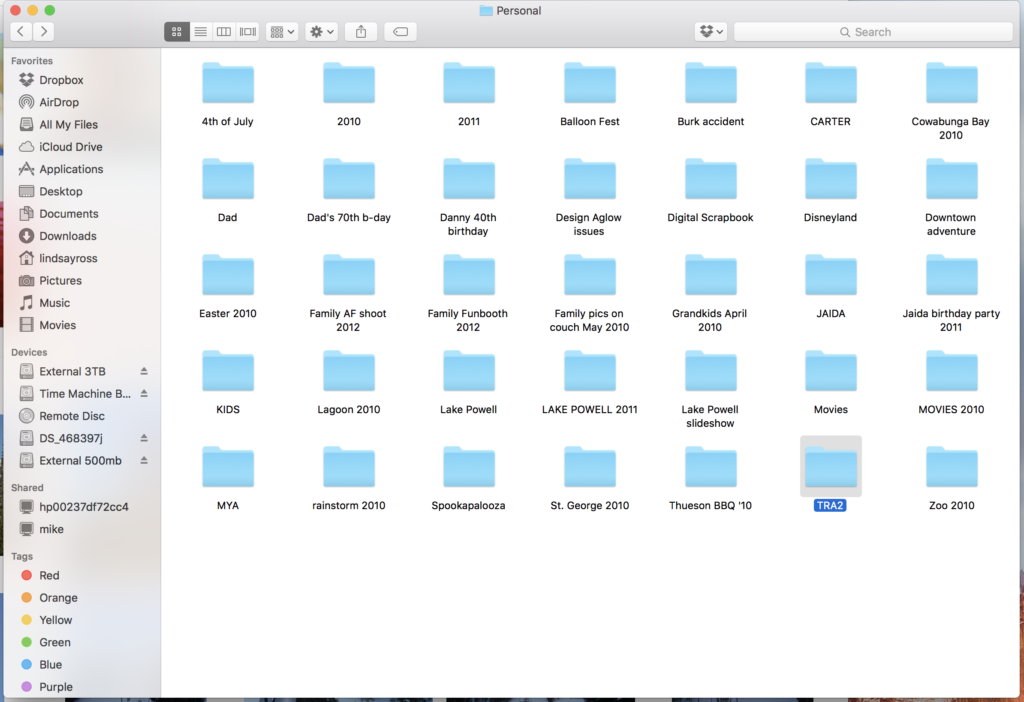
When I first started with digital photography, I started organizing too intricately.  I had folders for every little event, every occasion, every activity.  Millions of folders.  So if I wanted to find something, I had to start clicking through all these different folders to try and find it.  It was a nightmare.  And I hated the way it was organized.
Screen Shot 2016-05-10 at 2.26.27 PM

So then I just quit organizing all together and I had a big hot mess of digital photos.

Now, I organize by year, then month.  And a folder for vacations (because traveling is an important part of our family story).  That’s it.  And I LOVE it.  It’s simple.  It’s fast.  And I can find pretty much anything I’m looking for because I have a general idea of when most photos were taken.  When you start organizing and then printing, you become quite familiar with the photos you have, the ones you don’t have (the ones you neglected to take), and you can find them pretty quickly if you have a system for organizing.

Keeping your organizing simple, but efficient relieves a world of overwhelm and guilt.  Start somewhere.   Start small.  But start.  You don’t have to go all crazy with tags and keywords and color codes (granted, if you want to do this and it works for you, by all means…but if a complex organizing system overwhelms you, simplify it).

Again, begin with the end in mind.  What are you going to do with the photos?  If you’re printing in albums, how are you going to do that?  By years?  By kids?  By events?  Then organize your photos in a way that makes sense with your end goal.

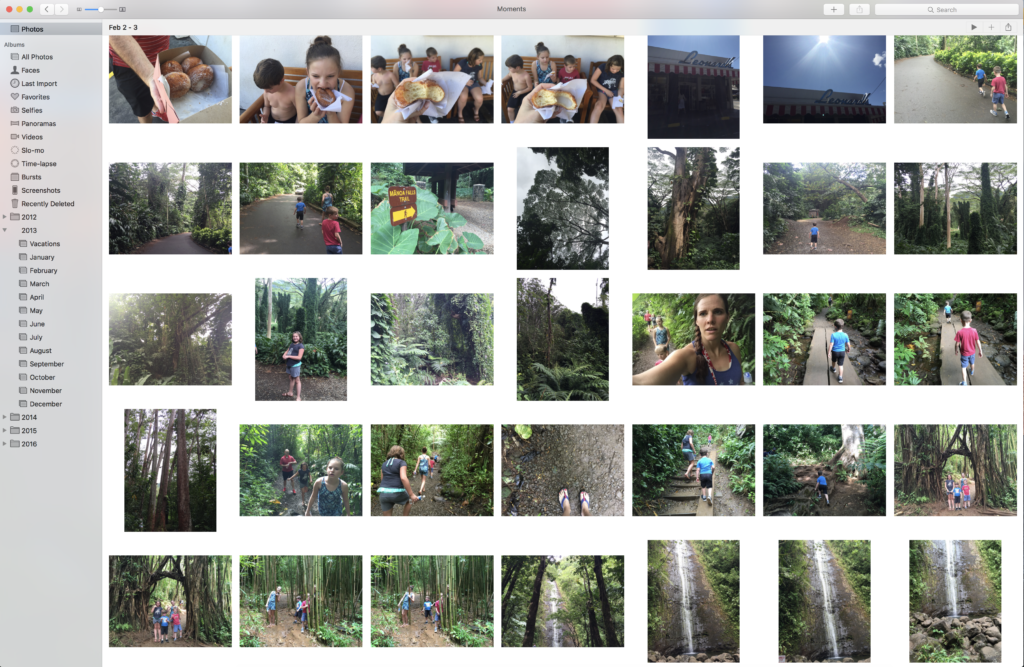
I personally pull all of my photos into Photos on my iMac (a similar program on a PC would be Picasa).  I organize them by years using Folders for the year and albums for each month.  Then I export them (by year) into a folder on an external hard drive (first system of back-up).  I keep a few years in my Photos library on my desktop (I have way too many photos to have them all in Photos at the same time–if you keep too many photos in there it slows the program way down and it will eventually just start crashing).  The rest are on the external drive so I can access them as easily as having them on my main computer.  Right now I’m doing photo albums by years and some vacation albums so this system makes sense for me.
Screen Shot 2016-06-03 at 3.31.49 PM

You can even organize your photos just by year, but the way I’m printing them, it makes more sense to have them split out by month as well (easier to sort and choose a smaller amount of photos when I go month by month as I’m catching up on years past).


Bottom line–there are a lot of different methods and systems you can use for organizing.  Pick one, and do it.


MISTAKE NUMBER SEVEN.  Not printing ANYthing.

Have you heard the phrase “Don’t let your kids grow up to be jpegs?”  No idea who came up with that, but it makes me laugh and it’s so applicable to the current generation.  All these jpegs and no one is seeing them.

If we follow the above steps, be more thoughtful about what photos we’re taking and why, delete as we go, and organize the photos, moving into a system of printing gets a heck of a lot easier.

I love this video about the dreadlock dad who scrapbooks.  Printing photos and having an actual physical copy of them forces us to emotionally engage with those memories.  It’s different than just seeing them digitally. Physical photos matter.

I read an article called The Family Stories That Bind Us.  The question:“What is the secret sauce that holds a family together? What are the ingredients that make some families effective, resilient, happy?”

The answer: “The bottom line: if you want a happier family, create, refine and retell the story of your family’s positive moments and your ability to bounce back from the difficult ones. That act alone may increase the odds that your family will thrive for many generations to come.”

Research shows that family’s stick together better if they know the stories of their family.  Their current family and their family from previous generations.  One incredibly effective way to do this is through photos.

I could go on and on and on about the benefits of printing photos.  But for now, let’s talk about a few things we learn while going through the process or sorting through photos, picking ones to print, and printing them:  1.  We see what and who we aren’t photographing enough.  2.  We discover the stories we’re missing–the every day moments we haven’t photographed along the way.  3.  We get more intentional about the photos we take and the stories we preserve–the every day details we want to remember and show to future generations.

Again, begin with the end in mind.  Thirty years from now, what’s the story you want told?  What do you want to leave behind?  What do you want people to be able to hold and feel and see?   What stories do you want your kids and grandkids to know?  What ones will matter?

Start somewhere.  I don’t know when a regular old traditional photo album stopped being enough for people, but if that’s where you feel you can start, start there.  Print off some 4×6 photos and stick them in an album.

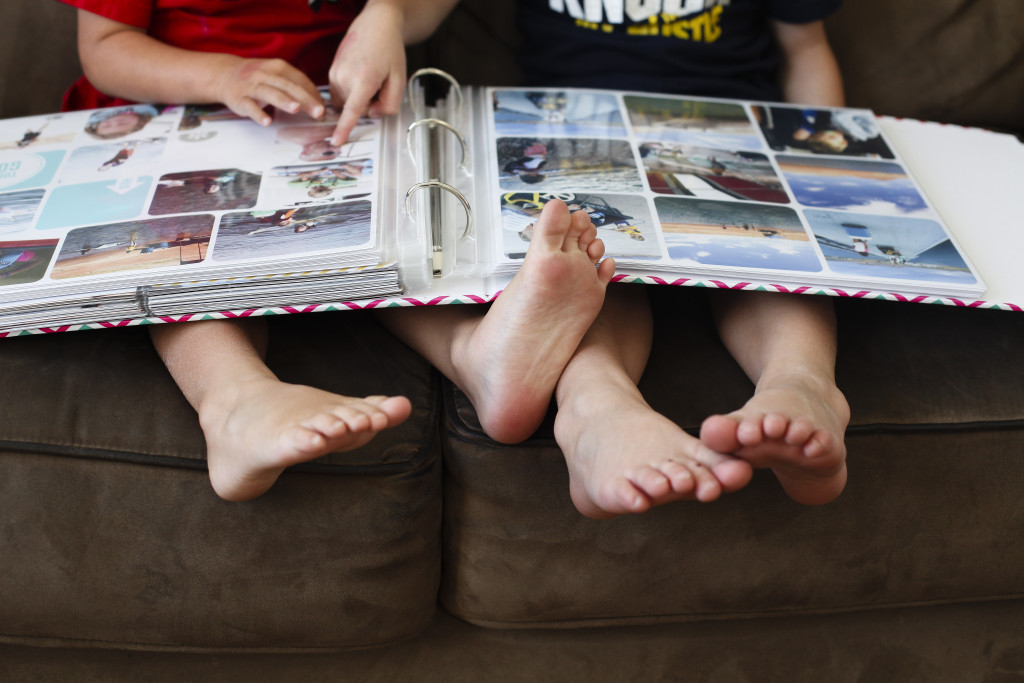
If you want something a little “fancier” where you can journal and spice things up a bit but is still suuuuuuper simple, try Project Life OR my personal favorite, the Project Life App.
IMG_4118

Make a photo book at one of the dozens and dozens of places that do them.  Print off your Instagram photos using Chatbooks.

Start with something that gets you excited.  A vacation you went on.  A baby album.  The past year.  Whatever it is that will get you excited about printing and sharing your photos, start there.  Then do another one.  And another.

If you plan to print year-by-year, start where you are, then work your way backwards.  Soon enough, with a commitment to stick with it, you’ll be busting out albums that your family can actually enjoy and engage with.

If you don’t know where to print your photos, read this article:  Where should I print my pictures?


Keep your “WHY” in mind.  Keep your “End” in mind.  And just start.


Are YOU making any of these mistakes?  Try some of these tips and see if you can turn the overwhelm into a much more enjoyable emotion.

And if you aren’t backing up your photos or aren’t sure you’re doing all the right steps to make SURE you don’t lose anything, PLEASE download the free Back Up Your Photos PDF.  Just enter your name and e-mail and I’ll send it over to you!
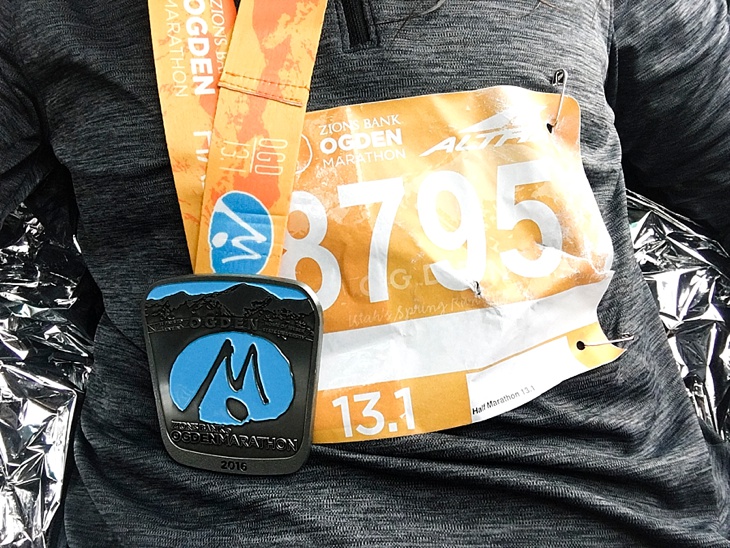
Lessons learned running a half-marathon

It’s still funny to me that thousands and thousands of people PAY money to run.  There’s a good chunk of the population that doesn’t get this at all.  We be crazy is all they think.  There’s another chunk who totally gets it.  I used to think running for the sake of running was ridiculous.  And then one day, I don’t know what changed, but I decided I was going to train for and run a marathon.  That was 16 years ago.  Since then running has saved me a lot of therapy bills.  I have no explanation for why, but it helps me find my happy.

I had plans to run the Ogden marathon this year, but changed my mind as I’ve been focusing more on strength training to prepare for the Spartan race I signed up for in August (may heaven have mercy on my ridiculously weak arms).  But a week before the race, my sister-in-law text me to come run the half-marathon with her.

Now, I exercise 5-6 times a week (30-60 minutes each day), but I’ve only been running once every few weeks.  And the farthest I’ve run in the last several months is about 7 miles.  I wasn’t prepared for a half.  At all.  And prepare (more like OVER prepare) is what I do best.  I don’t like doing things I’m not prepared for.  But I’ve been in a bit of a funk the last few months and thought I could use a good dose of racing “spirit” (if you’ve been in any type of race, you know what I’m talking about).  So on a whim, I signed up–6 days before the race.

I was nervous all week long.  I wasn’t nervous about not finishing.  They’d have to carry my cold dead body off the race course before I didn’t finish.  But I’m competitive.  I have certain expectations of myself and didn’t want to get a slower time than I’m used to.  I tried to get to the mental space of “just finish” but I never did.

This was really a test to see where my mental strength was at.  Could I push myself through discomfort, pain, probably some suffering?  I’m admittedly not as mentally strong as I’d like to be so I saw this as an opportunity to strengthen that a little.

I read a quote once from Amelia Boone, one of the toughest obstacle course racers on the planet (she wins Spartan races all over the country–she’s legit).  She said “I’m not the strongest.  I’m not the fastest.  I’m just really good at suffering.”  This quote sticks with me.  Sometimes getting where we want and what we want has less to do with being the strongest or fastest (or smartest) and more to do with pushing through whatever fear, pain, or discomfort we may have to get where we want and what we want.

So race day came and went and I learned a few things from the experience:

**Being prepared is definitely not overrated.  There’s people who seem to be good at winging things throughout life.  I’m not one of them.  Being prepared matters.  I NEED a lot of preparation time for things.

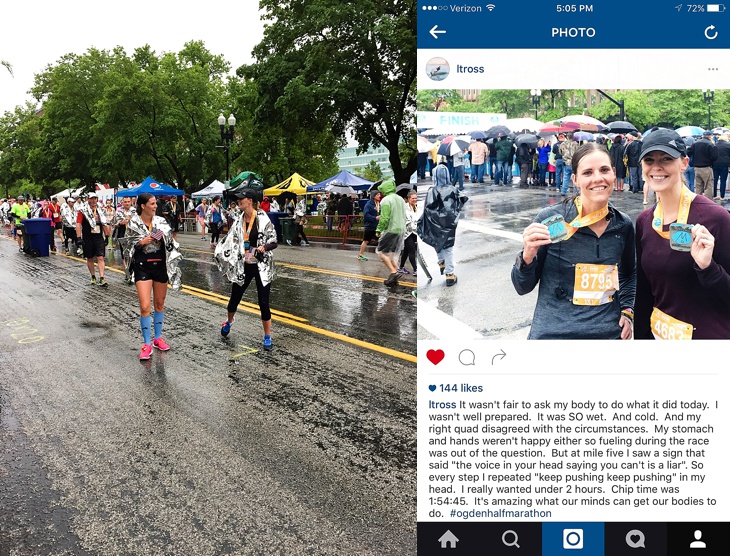
**Though our mind can push us through things, there’s always a cost.  I was hurting through much of this race.  At mile 5 I saw a sign that said “That voice in your head saying you can’t is a liar”.  I held on to that through the rest of the race and kept telling myself “Keep pushing.  Keep pushing”.  And I did.  I pushed.  And I finished with a decent time (for me).  But there was definitely a physical price to pay for doing so.  My muscles weren’t prepared for a run that far.  My body in general wasn’t prepared for a run that far.  There are some people who seem to be built for running and endurance sports.  I am not one of them.  I normally have to train, a lot, to do these type of races.  I paid for this in the days after (and am still paying for it).  Our minds can push us to do amazing things, but if we haven’t properly prepared, there is a cost.

**The aforementioned “cost” was worth it.  Sure I couldn’t walk down stairs for 3 days, I had a horrible stomach ache for several days, my right quad still screams at me when I move it certain ways, I still can’t squat, and a few other physical ailments I don’t want to discuss on the www, BUT I proved to myself I can push myself through pain.  I can push myself to do things I wasn’t sure I could do.  I learned just how powerful the mind is.

**Many times, I hold myself back from doing great things because I’m afraid to fail.  Or afraid to look dumb.  But in the end, it’s almost always worth taking the risk.  I miss out on too much for fear of not doing well when I try.  I don’t like not being good at something.  But I have to start somewhere if I want to get anywhere.  Life opens up when I get rid of the fear of looking dumb (even if it’s just to myself–most people aren’t paying any attention to what I’m doing anyway).

**This isn’t new to me, but every time I run a race I’m reminded how amazing the running community is.  People are just nice.  And encouraging.  And excited.  And positive.  I really dig the running community.

**Knowing someone is at the end of a race waiting for you makes a difference.  My husband and kids weren’t able to come because, Hi, I signed up for the race 6 days before and we had too many scheduling conflicts to get them there.  But my little brother was there and I knew he’d be at the end.  Not the same as having my husband and kids, but still made a difference knowing someone was there.  Having people is a HUGE blessing.  It rained the entire race and there was my brother at the end with a towel and blanket which I’m pretty sure saved me from hypothermia.

**Rain mixed with long runs makes you chafe in places you’d never dream possible.  Just so you’re aware next time you run in the rain for 2 hours.

**The crowd in general matters.  There’s a few points in races where your mind starts to think “Whyyyyy am I doing this?”  And then you respond to yourself “I really don’t know”.  And then the conversation continues with thoughts I probably shouldn’t type.  But then you see people.  Volunteers who came to hand you water, and bananas, and….pancakes (why was someone handing out pancakes at one of the stations–I got nauseous just smelling them, but then again, my stomach was not pleased during the entire race so coulda been that.  I’m curious if anyone actually grabbed one of those pancakes dangling from some strangers hand as we trudged past….).  And streets lined with people holding signs and cheering for people they don’t even know.  For those of you who go to races and cheer, you matter.  Trust me.  You matter a lot.

**We, all of us, can DO more than we think we can.  I’d say the majority of us are our own worst enemy.  We’re the ones keeping ourselves from doing those things we want to do.  We can do more.  We just have to believe we can and then we just have to DO.

And what’s a life event without photos.  I would have loved to snap a few during the run but my hands weren’t working at all.  I couldn’t grip or hold on to anything.  I couldn’t even unzip my ziploc to eat the gels I had.  I tried.  It wasn’t happening.  No food for me.

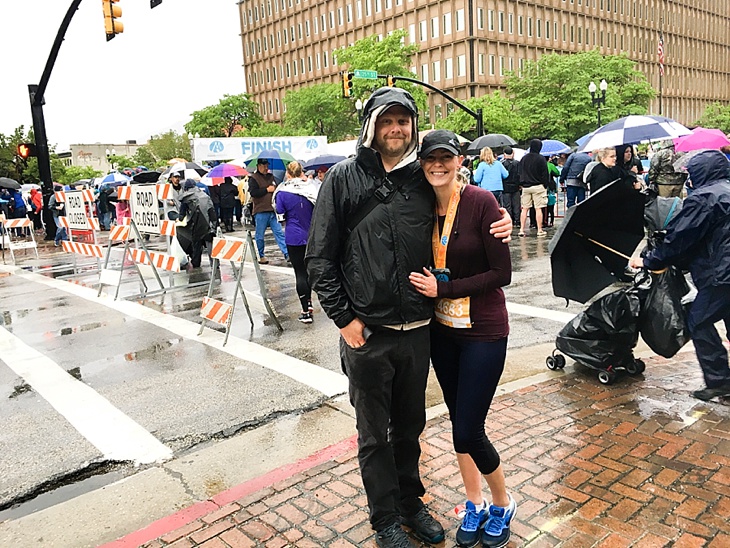
But I got a few pics before the race and a few after.

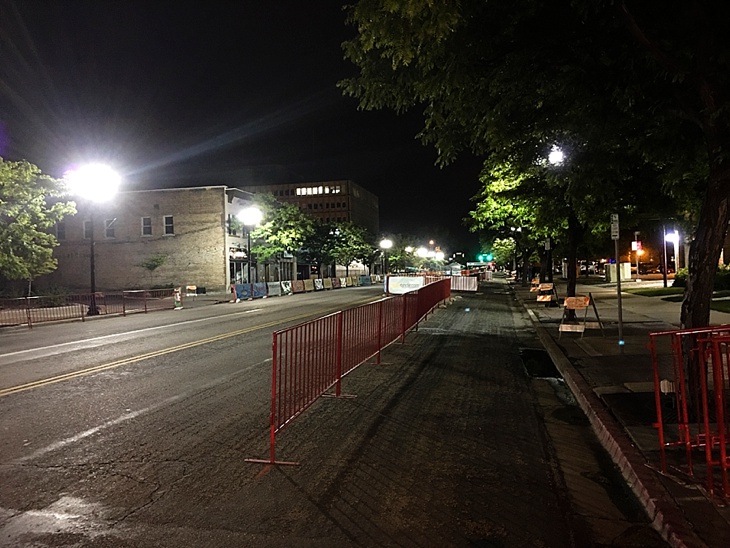
The finish line street when we got there to catch the bus.  At 4:30am.  An hour that no one should ever be awake.

2016-05-26_0002

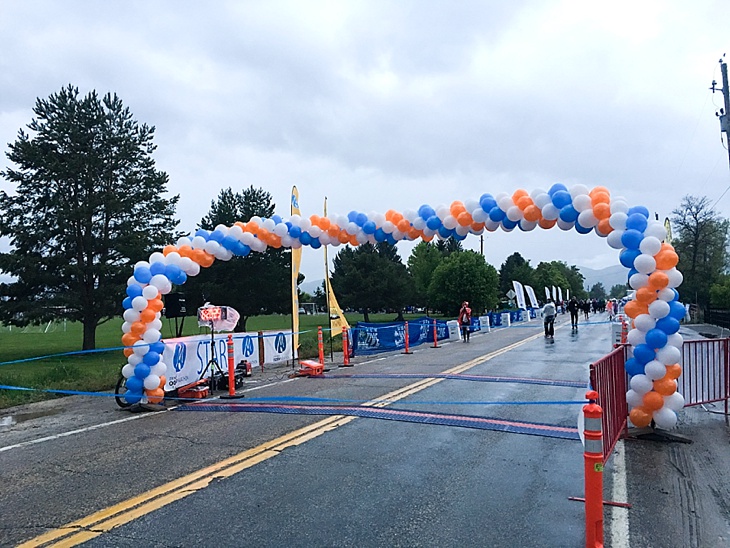
Starting line at Eden park.  I need a cabin in Eden.  That place is SO pretty.

2016-05-26_0001

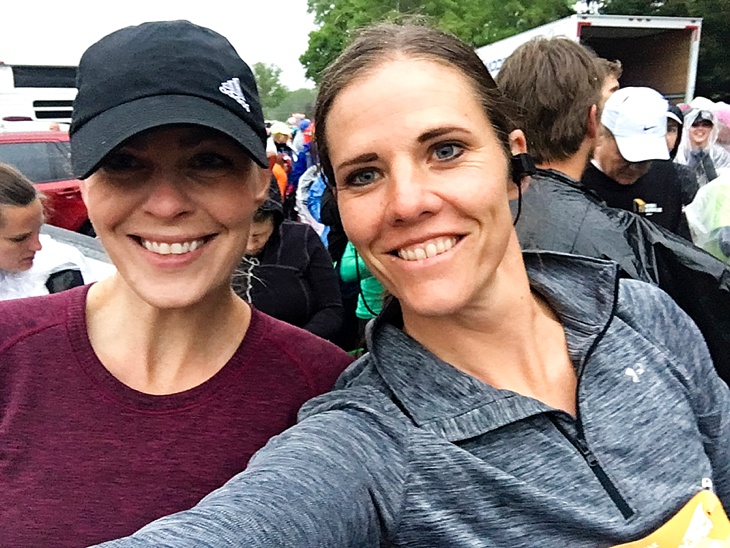
Pre-race shot.  When our hands still had feeling and our quads weren’t screaming “I hate you”.

2016-05-26_0003

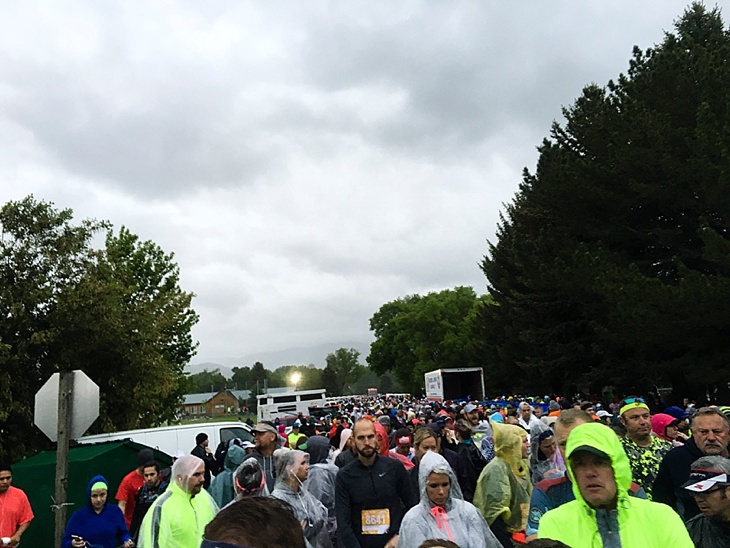
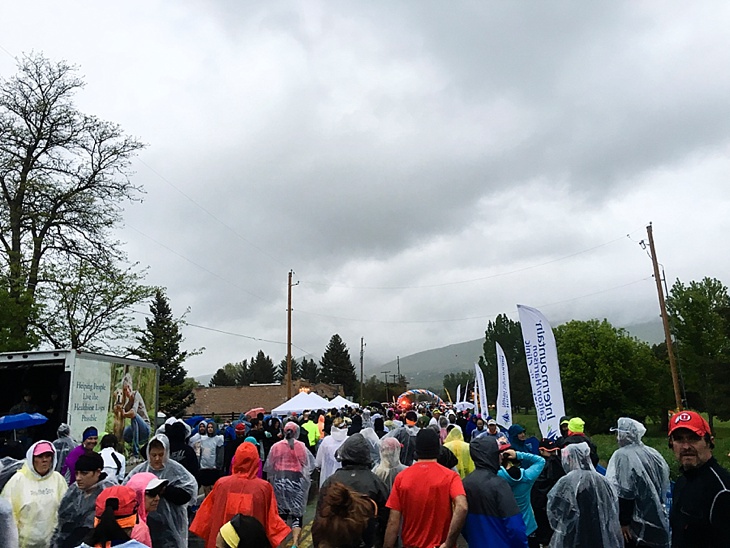
All of the crazy people who joined me and payed to do this.  Love the shot of the masses.  Lots of good, hard-working, goal driven people in this crowd (with a side of crazy).

2016-05-26_00042016-05-26_0005

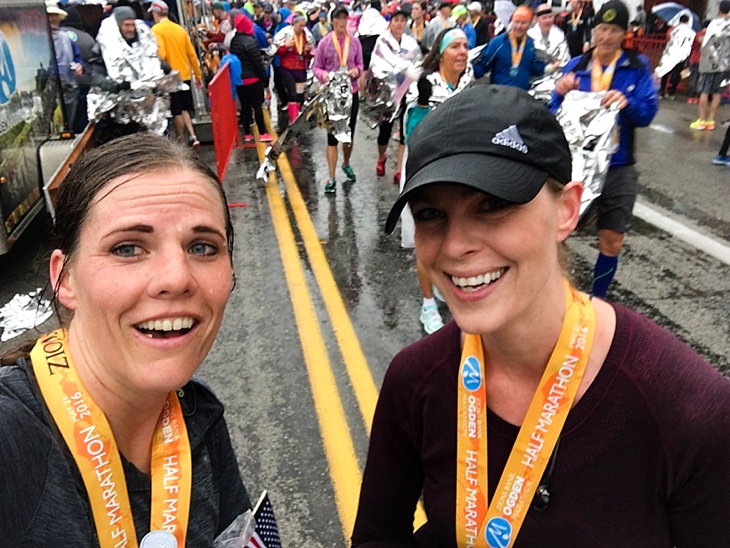
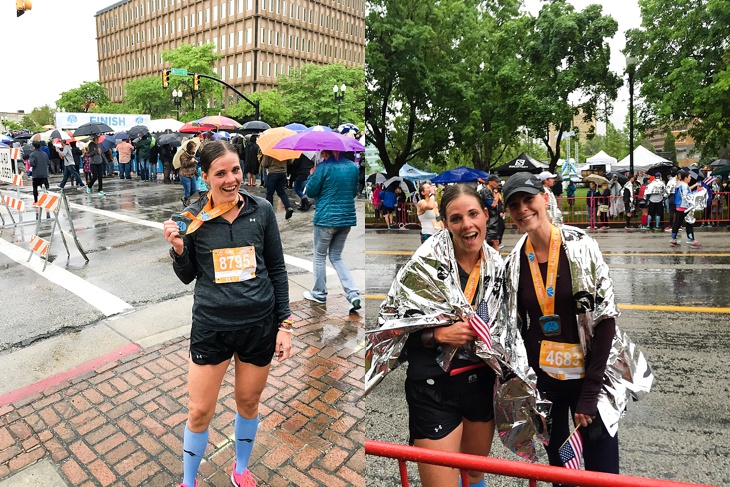
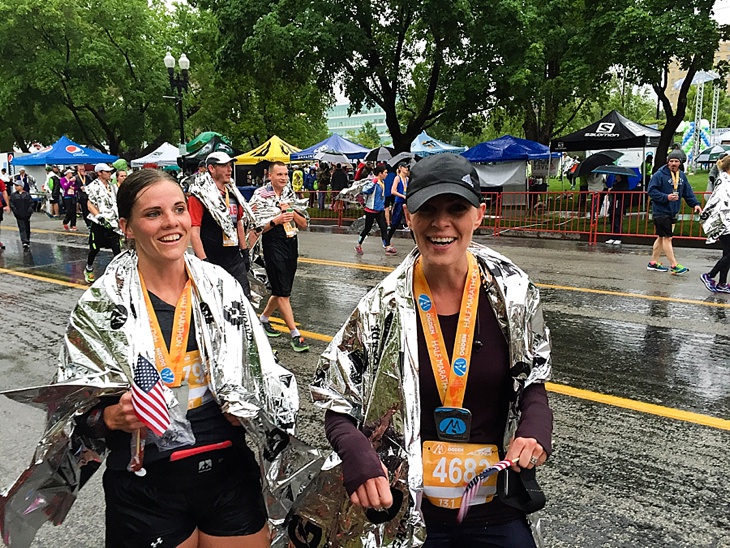
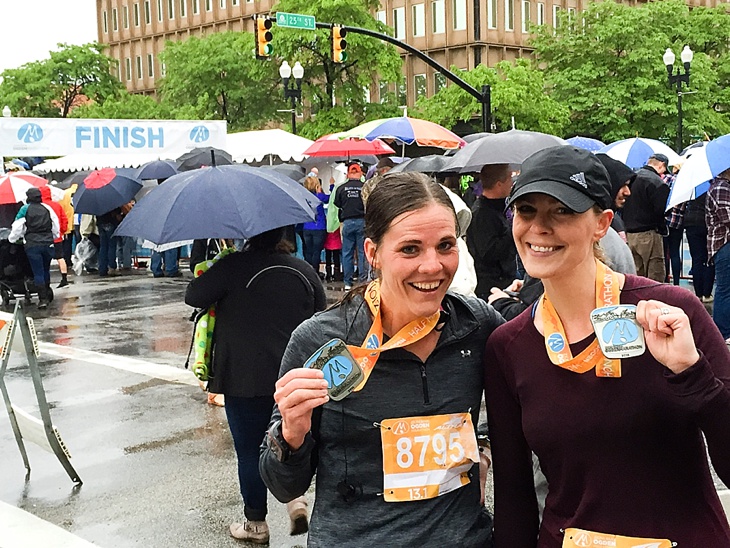
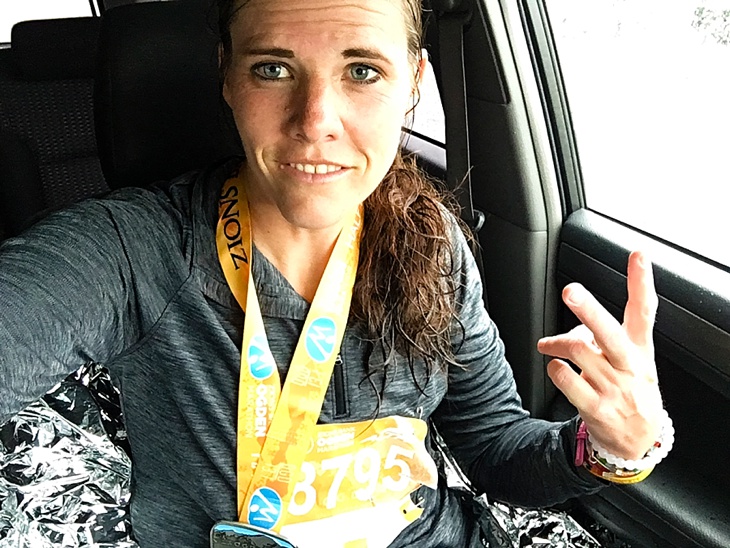
Annnnnd after the race.  As we ran down the final stretch (longest mile ever), there were what I assumed to be some older war vets on the course handing out little American flags.  Totally brought tears to my eyes (or maybe that was just rain on my face) and gave me just the boost I needed at the end (I love this country SO much) although it was incredibly difficult to keep hold of the tiny wooden stick.

2016-05-26_0006

2016-05-26_00082016-05-26_0009

Those thin silver whatever they are (emergency blankets?) provide a surprising amount of warmth.  Maybe it’s just in your head, but it doesn’t matter.  I was really grateful for that thing.

2016-05-26_00142016-05-26_00152016-05-26_0017

We didn’t linger after the race at all.  It was straight to the car.  I had to sit in there with the heater full blast for a good 20 minutes before I could grip the steering wheel to head home.

2016-05-26_0012

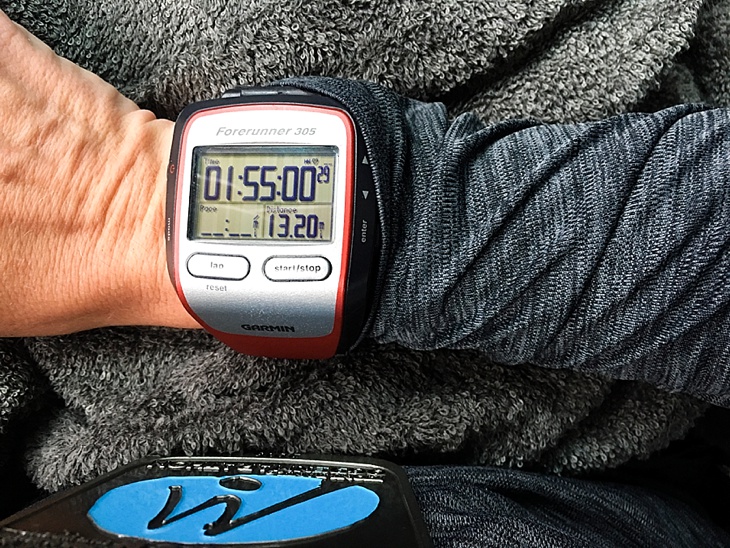
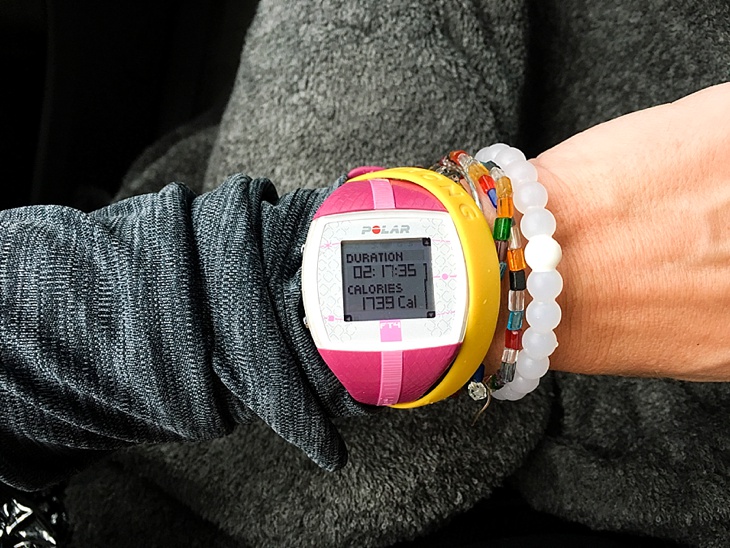
I ran my first marathon with NO music and NO time tracker.  No idea how I did that.  I’m super inconsistent with my pace so it’s really helpful to have my Garmin to keep track of how fast (or in most cases how slow) I’m running.  Helps me know how hard I can push without completely tanking at the end.  Although I still always run too fast in the beginning.

2016-05-26_0011

Always interesting to have the heart rate monitor results.   I stopped it when I made it back to the car.  My heart rate was actually higher than it usually is.  Nerves maybe?  Or the cold?  No idea.  But when the race started, my heart rate was already around 175.  And it hovered around 185 the rest of the race.  Normally when I run it’s around 170 (yes, that’s still high but normal for me.  I have a resting heart rate a little below 60 but when I exercise it goes crazy high).

2016-05-26_00102016-05-26_0013

My legs were crazy sore the next few days.  Sore to walk.  Sore to the touch.  I never realized how much my 4 year old touches my legs until it brought tears to my eyes every time he touched me.

2016-05-26_0016

Definitely a race I won’t forget and one that taught me a few things along the way.  Trying to say “yes” to more things than I say “no” to.   “You know all those things you’ve wanted to do?  You should go do them.”

My first triathlon–plus beginner triathlon tips!

{I included a bunch of triathlon tips for beginners from beginners at the bottom of the post–if you’re interested in doing one, this will be super helpful}

Last summer I got a wild idea (truly, it was wild for me) to compete in my first triathlon. This may sound like no big deal to some people, but it turns out, I’m not a swimmer. Not as in “I don’t like to swim” but as in “I really don’t know how to swim”. I can get in the water and get from point A to point B, but I certainly don’t do it correctly and I usually have my face out of the water. Because putting my face in the water, with goggles on, and all my breathing holes (i.e nose and mouth) submerged is the perfect storm for a panic attack. I can’t explain why exactly, I just don’t like having my face in the water. And I’m a classic nose plugger (plug my nose when I jump in the water, plug my nose when I fall on the water ski, plug my nose always). Plugging your nose during a triathlon seemed like it was off the table. But I’m getting ahead of myself.

I got the idea, decided I was going to do it, and signed up for my first sprint triathlon. There three moderate hurdles I had to get over: 1. The race was only about a month away. 2. I didn’t have a road bike nor had I ever ridden a road bike. 3. I didn’t know how to swim. Minor details.

At this point, I look pretty foolish signing up for this. But I’ve secretly wanted to do one for a while and truth be told, I was sick of fear pushing me around. Sick of being scared to try things I wouldn’t automatically be good at. And sick of being SO panicked about swimming. The only way to get over these fears was to just DO it. Jump in with both feet. Without plugging my nose of course.

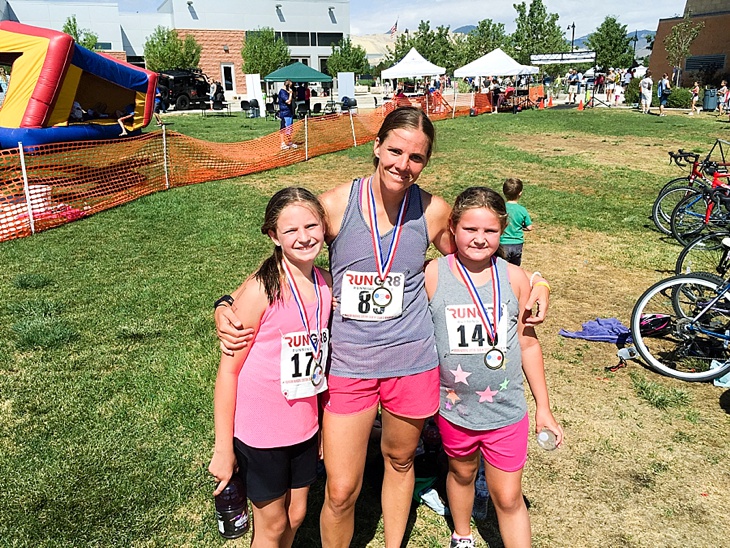
Usually when I’m faced with something “scary” like this, I talk a friend or family member in to doing whatever it is with me. Instead, I talked my girls into doing the kids triathlon. This would be their first race of any kind and they were both really excited about it (they’re already good swimmers–I started swimming lessons when they were young determined not to let any of my kids turn out like me when it comes to swimming).

Once I signed up and was committed, I asked a good friend (who is a great swimmer) to teach me how to freestyle properly. At first I used a nose plug but it rubbed my nose raw and didn’t work well and was serving as a crutch for my real problem. So I ditched it. She worked with me for several hours helping me figure out the stroke and breathing. Then it was up to me to practice practice practice. Which I did as little of as possible because every single time I got in the pool, I got anxious and panicky about what was ahead. But I did as much as I could tolerate and enough so I could make it the distance without having to flip too much on my back so I could catch my breath.

Next step was to get a bike. I’d been saving to get a road bike at some point anyway so this was a good push. I decided to go all in on this as well and get clip in pedals. I was really nervous about this because hello, your feet are clipped in to the pedals. For me, this has disaster written all over it. But I got some great pedals that are easy to clip in and out of (Shimano Look pedals if anyone is interested). I got the bike about 3 weeks before race day so I had a little time to practice out on the road and practice clipping my feet in and out. The great thing about the race, if all goes right, is that you really only have to clip your feet out once, at the end of the ride, when you’re transitioning to the run. Clipping my feet in and out turned out to not be a big deal at all.

If you’re interested in doing a triathlon and don’t have a bike, my guess is there are places around you that rent them. Don’t let no bike be a deal breaker.

I went on maybe 6 or 7 training rides before the race including one time where I rode the bike and then immediately went on a run so I could see what my legs felt like running right after a bike ride. If I had more time before the race I would have done this more. I also made sure I read up on Food Habits and Hacks for Runners so I could take part in the whole race and not faint halfway through!

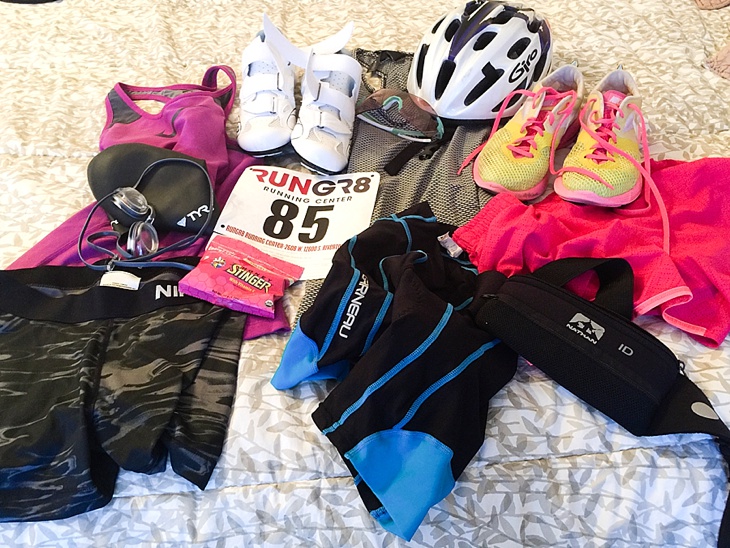
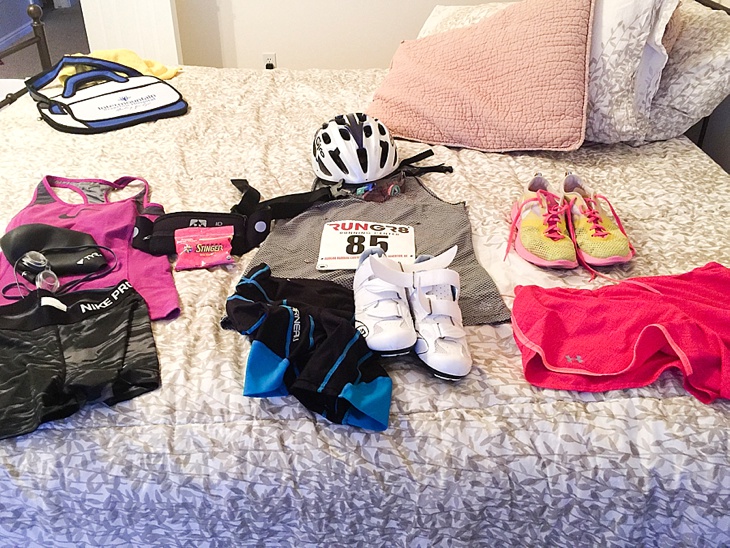
After the bike investment, I didn’t want to spend more money on a triathlon “suit” so I just wore spandex shorts and a tight tank-top in the water for the swim, hurried and put bike shorts on during the first transition, then took the bike shorts off and put running shorts on during the last transition. Yes, that added to my total time but I wasn’t in this for any sort of time. I just wanted to DO it and see how everything works. I wasn’t terribly concerned about doing it fast.

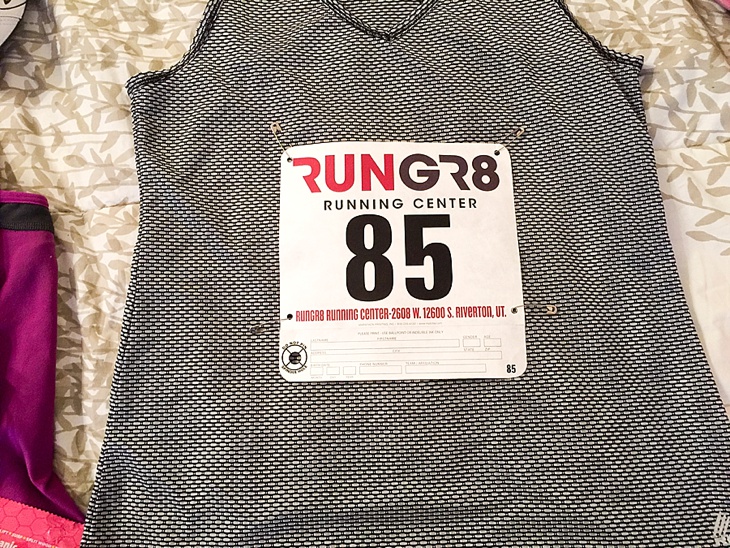
I was incredibly nervous the night before. I laid all my stuff out by sections of the race (swim, bike, run) before I packed it in my bag. Checked and double checked to make sure I wasn’t missing a critical piece (like my biking shoes, or helmet, or goggles or any piece of equipment for that matter).

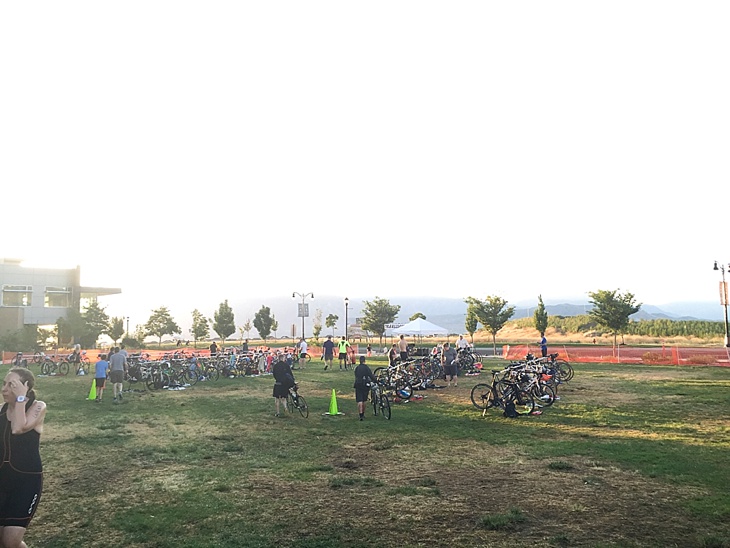
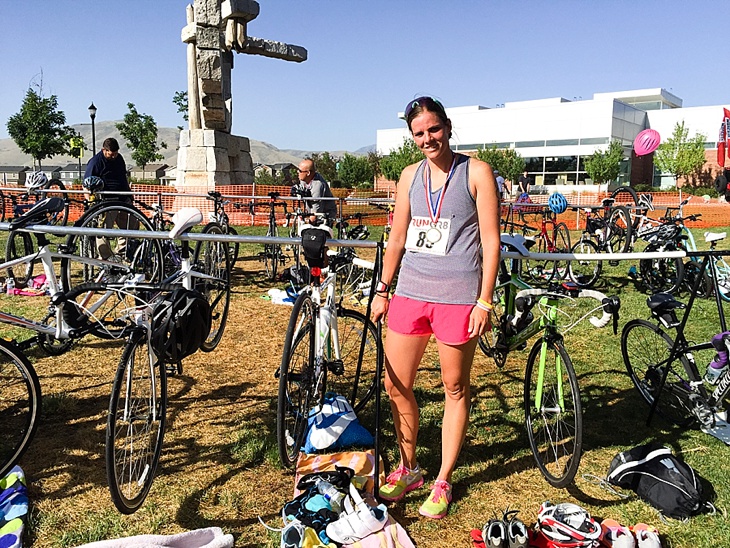
2016-04-21_00192016-04-21_00202016-04-21_0021I got to the race early so I could find a good spot to put my bike. I deliberately chose a race that didn’t have a lot of competitors in it so the transition areas weren’t total chaos, but I still wanted my bike somewhere it would be easy to find. Once I picked my spot, I hung the bike seat up on the bar and laid out all my stuff so I could get to what I needed to during each transition (more tips on this at the end).
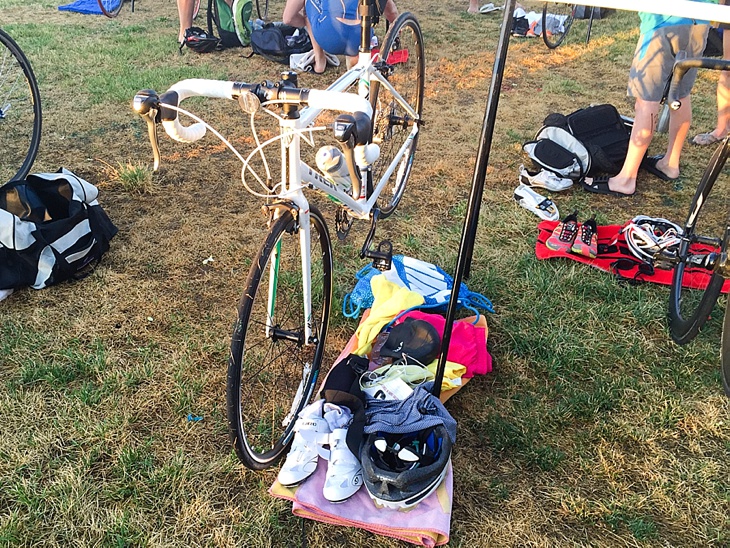
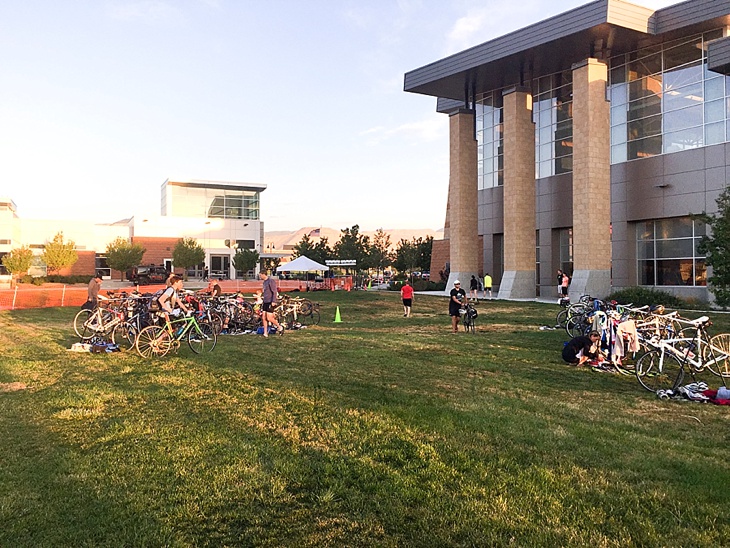
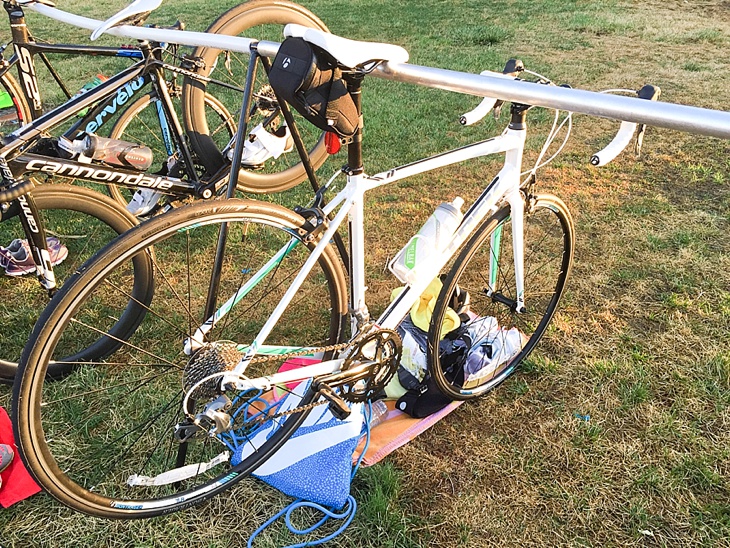
2016-04-21_00222016-04-21_00232016-04-21_0027

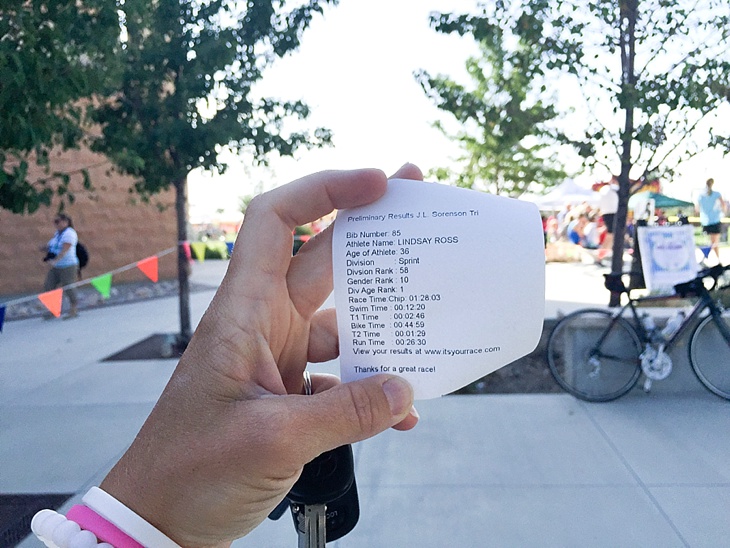
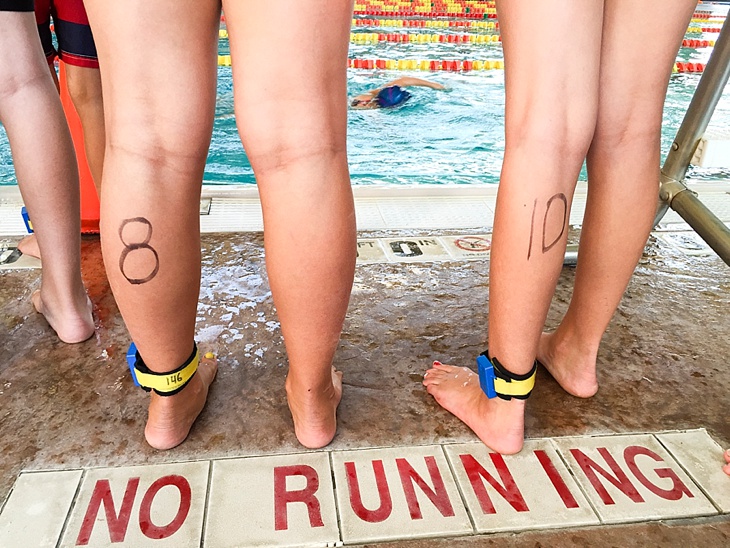
2016-04-21_0026In this race the trackers were on our ankles and you ran through a “transition in” and “transition out” spot so you knew your time for your swim, your first transition, your bike, your second transition, and your run. This is helpful if you plan on being competitive about your time while racing and helps you know where you can shave time off in the future.
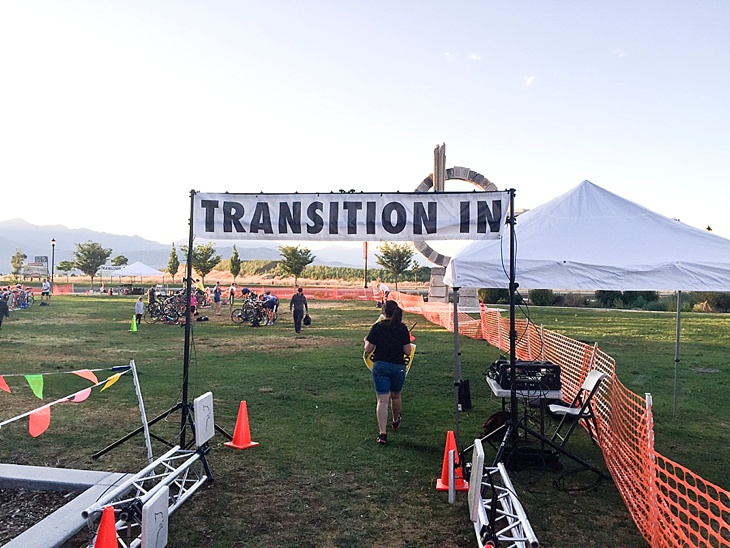
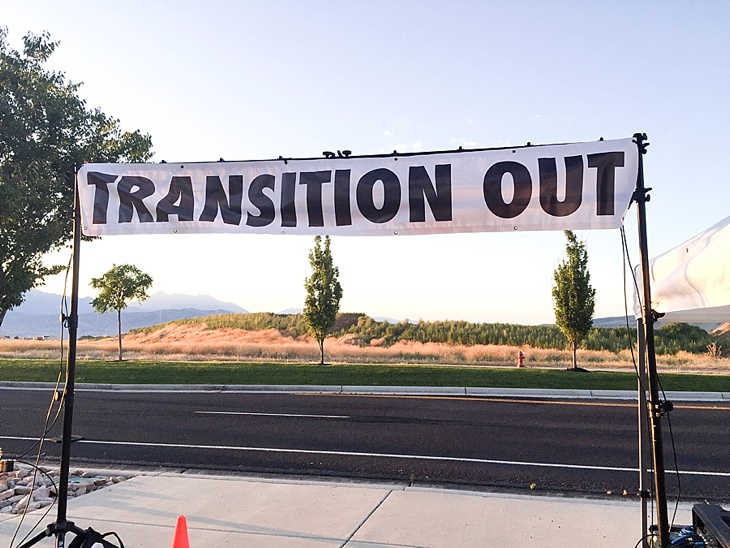
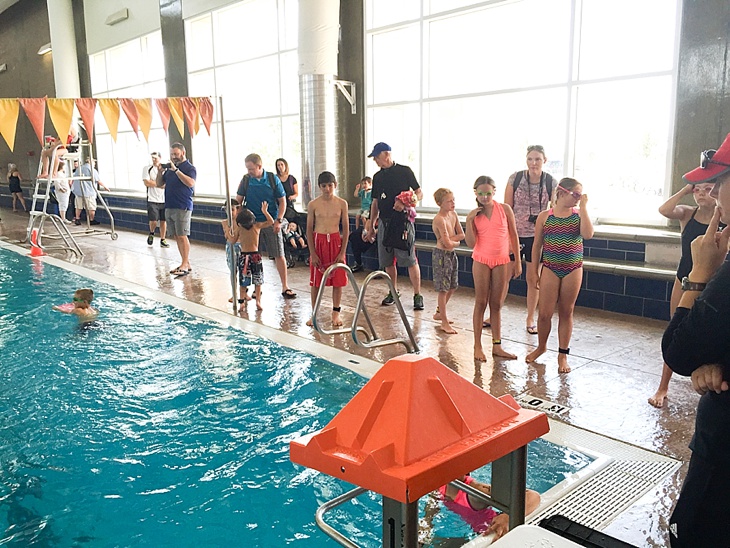
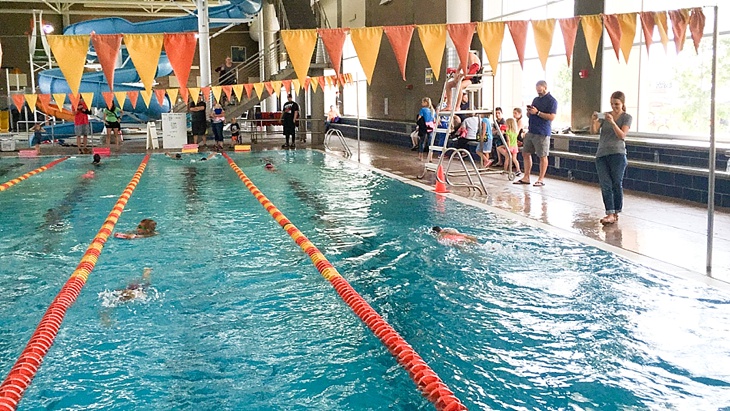
2016-04-21_00252016-04-21_0024Thankfully for me the swim was first so I could get it over with. Most of the people in line with me disagreed and weren’t looking forward to the run. The run was the one part I felt completely comfortable with. I’m not a fast runner, but I enjoy running.
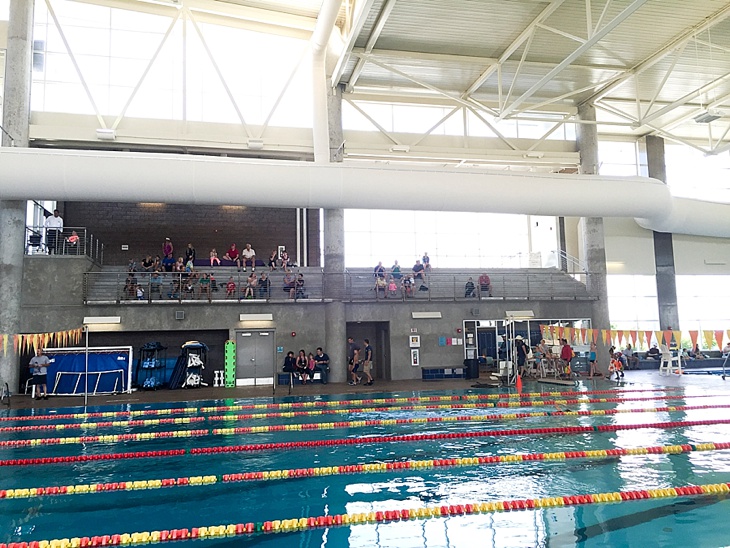
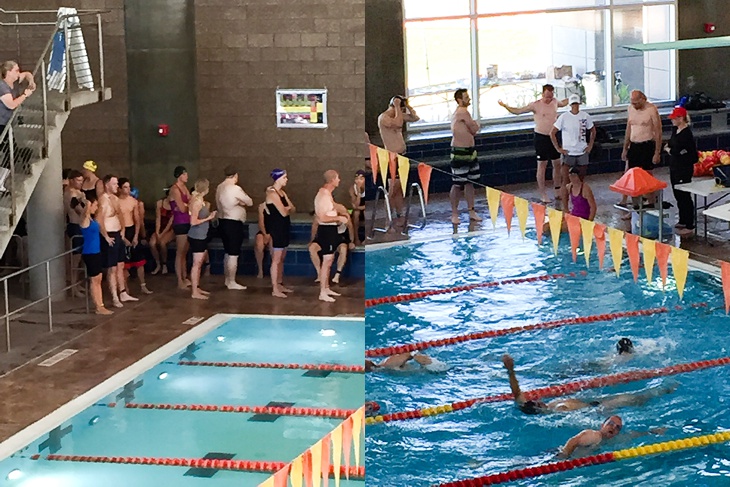
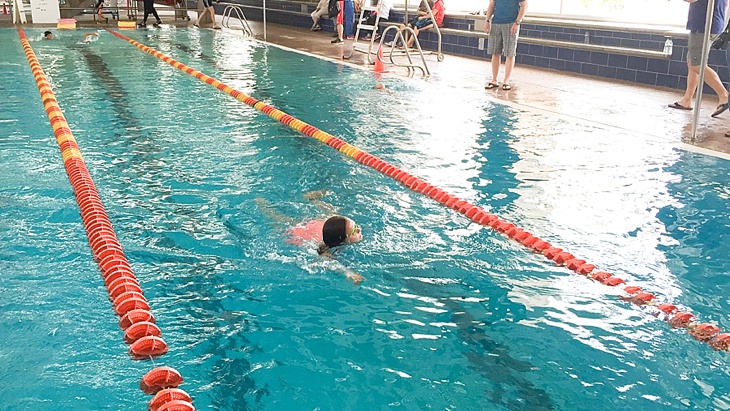
I was towards the back of the line so I didn’t have to stress about swimming too slow and having people trying to swim over the top of me. When you swim in a pool, they stagger each person about 10 seconds apart. Because you’re being timed by a chip, they don’t start your time until you get in the pool and they tell you to go. So the time at the finish line isn’t accurate for anyone but the person who started very first. Your real time is determined by the chip you wear around your ankle.

I either got a chip too big or didn’t put it on tight enough so it fell off while I was swimming. I dove around trying to find it (and yes, I was plugging my nose while doing this)–finally found it a lane over floating on the water. I had to hold it in my hand until the end of the lane, jump out of the pool and someone helped me get it back on tight, then jumped back in and finished the swim.

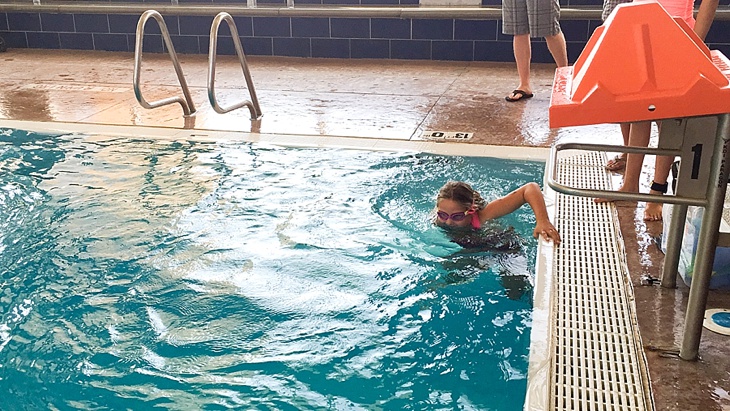
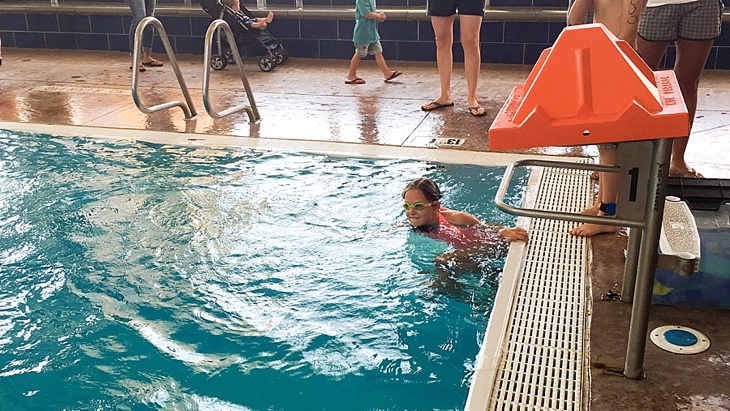
The swim part ended up not being as bad as I feared. I honestly just wanted to finish under 15 minutes (it was a 400m swim–yes I realize if you’re a swimmer 15 minutes for that distance is slow, but I was just hoping not to have a panic attack about my breathing or get kicked in the face by someone. Neither of those happened so I claim success). My swim was somewhere around 12 minutes. Definitely room for improvement but I got in the freaking pool….

2016-04-21_00422016-04-25_0006When you swim in a pool, there are people going each direction in each lane. I was worried about people climbing over the top of me in the water (I’ve heard some horror stories) but because I was toward the back of the pack on starting, it wasn’t bad at all.
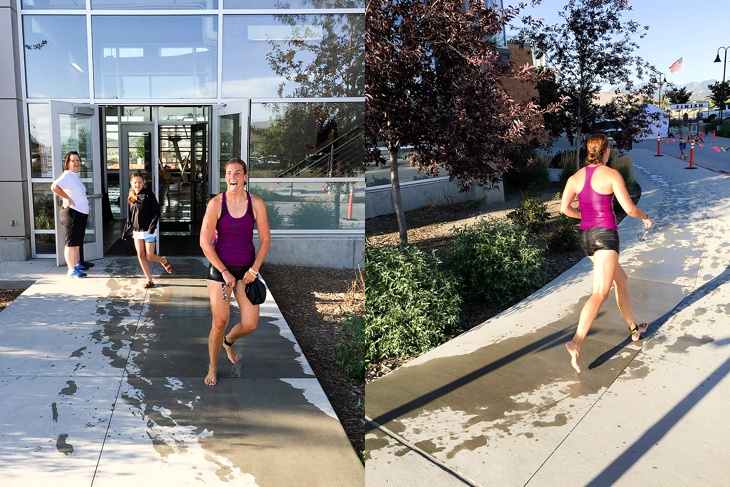
After the swim, I jumped out of the pool and headed toward the first transition. This is where I put on my biking gear (put biking shorts on over my spandex shorts, put a loose tank top over the one I swam in, socks and biking shoes, helmet, a pack with my phone and headphones. Some races won’t let you listen to music but this one did. It was a huge relief for me to be out of the pool.

2016-04-25_0007

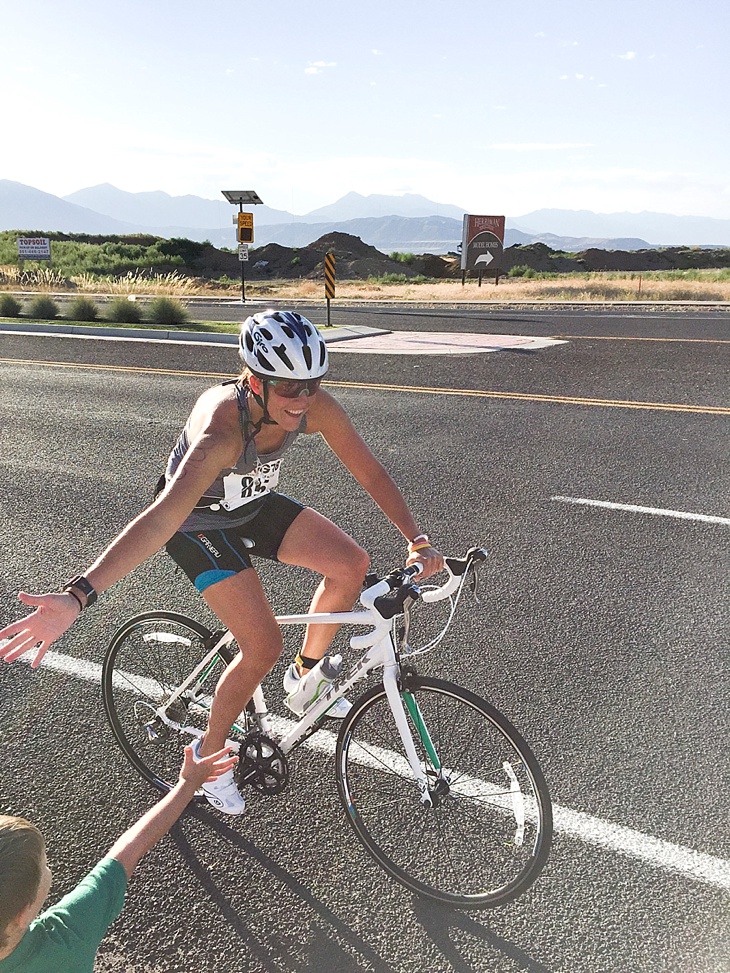
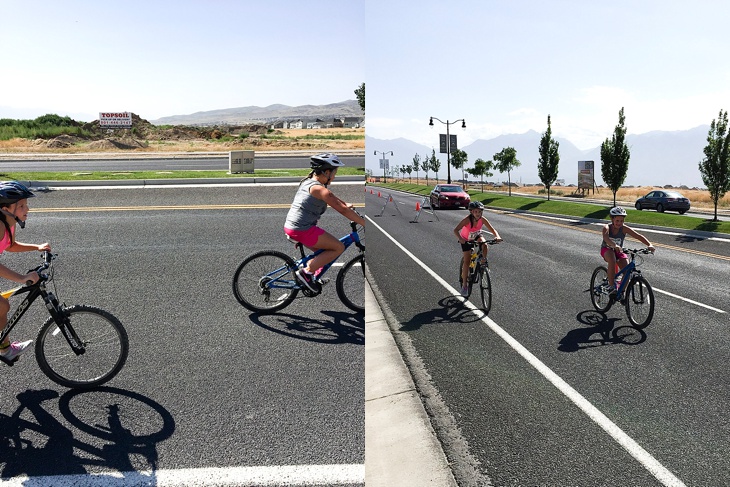
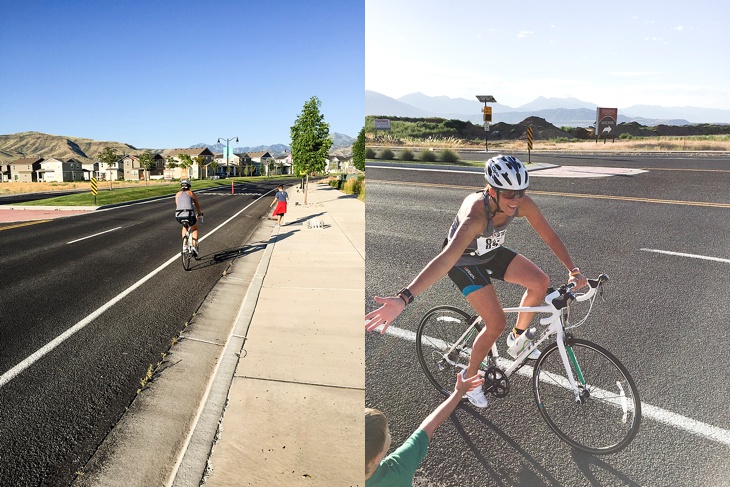
Then it was off on the bike. I believe it was 12 or 13 miles. I’m still so new to biking I haven’t figured out how hard I can push or what speed is good for me so I just rode. I drove the course of the race the night before so I knew kind of what to expect. There was one really big hill climb about half way in–mentally it was good to know that was coming. It was suuuuuper windy the last half of the race. Enough that the front of my bike was wobbling pretty bad. Thankfully crashing wasn’t on the agenda. My bike time was slower than I anticipated but not terrible.

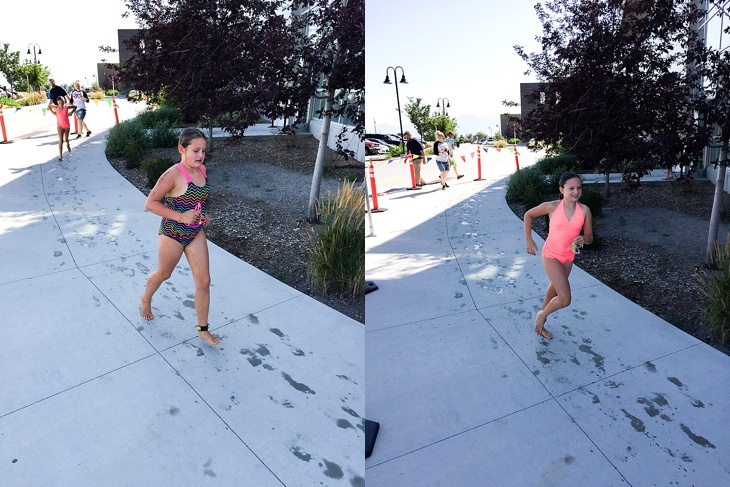
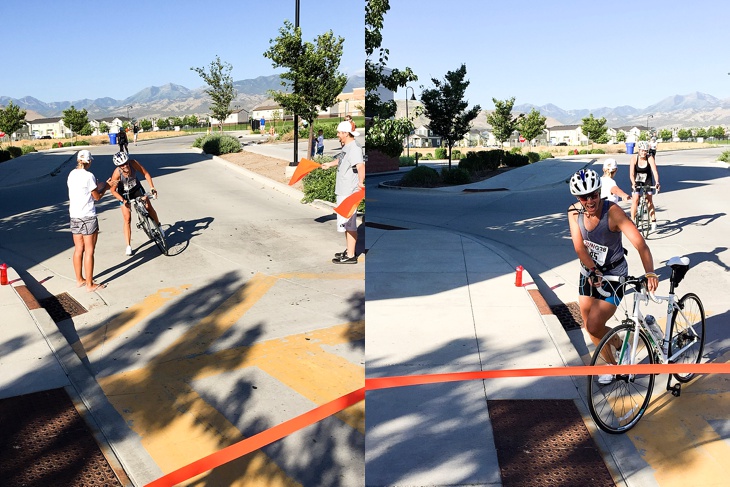
2016-04-25_00022016-04-25_0005After the bike it was on to the run. My legs were a little wobbly after the bike ride, but not bad. And it wore off fast. As I was running through the transition one of the volunteers noticed I still had my bike helmet on. In my haste to get a good transition time I forgot to take it off. I didn’t feel dumb at all. Sheesh. I just tore it off and left it with him to retrieve later.
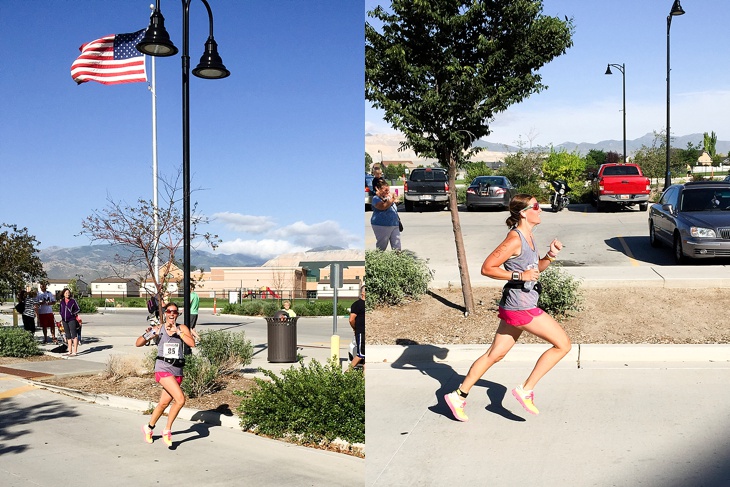
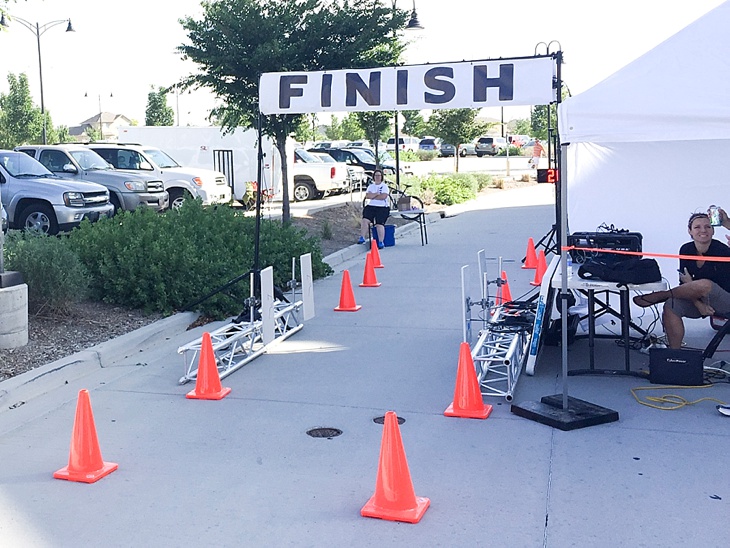
2016-04-25_0004

The run felt good. Like I mentioned, I’m not a fast runner. But I like to run so I was looking forward to this at the end. Now that I’ve done it, I know I can push harder on the bike and run (and the swim for that matter).

2016-04-21_0037

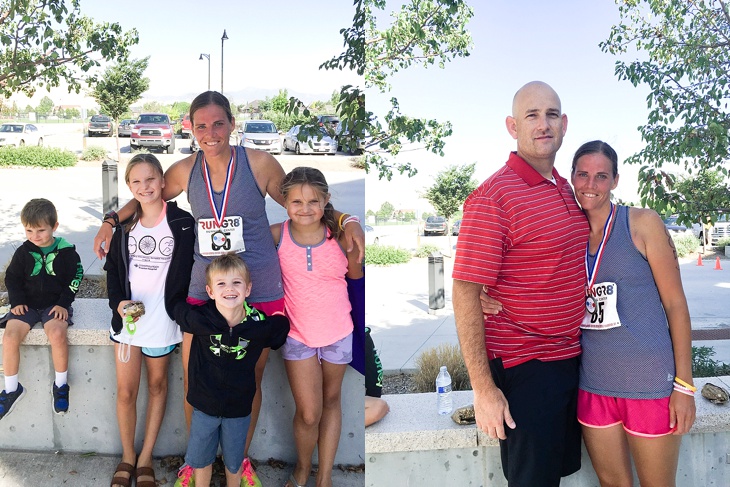
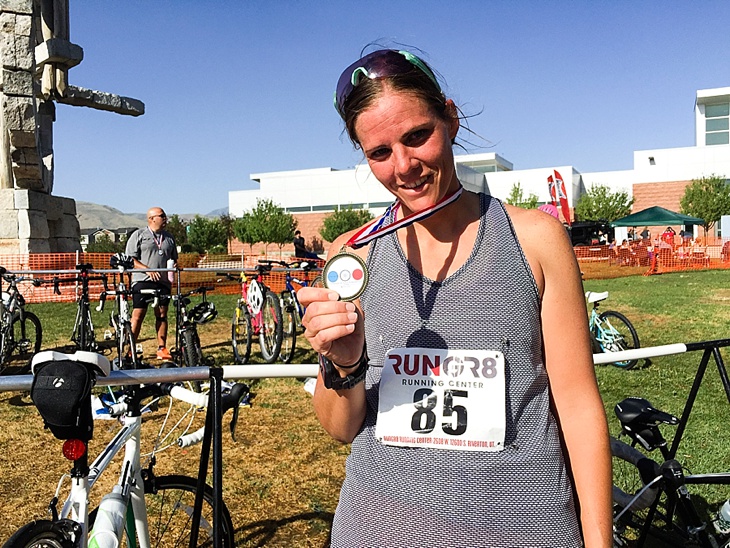
I’m always happy to finish the race, but I was especially happy (relieved) to finish this one. I love the racing spirit and it was even stronger this time. Crossing the finish line after you’ve trained hard and did something you weren’t 100% sure you could do is a feeling I haven’t been able to get any other way. My husband was there with our four young kids (who he had to drag out of bed insanely early). It’s a huge boost to have your people there cheering for you.

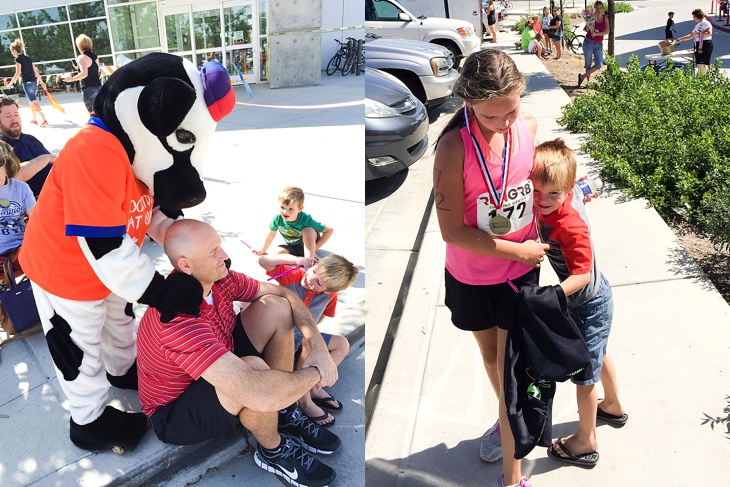
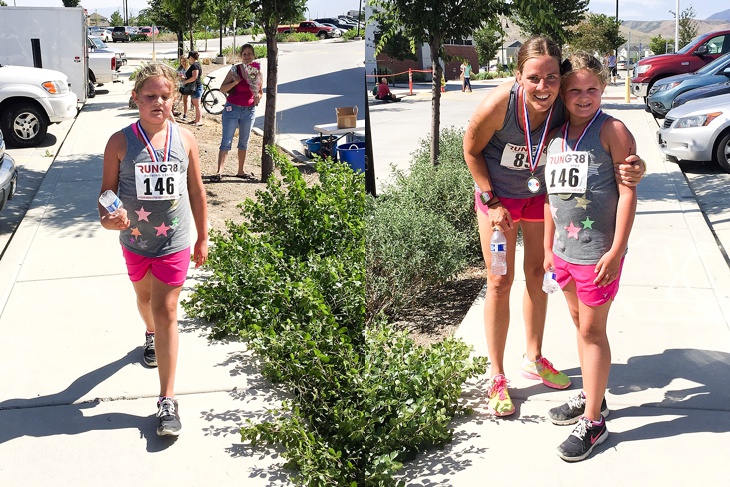
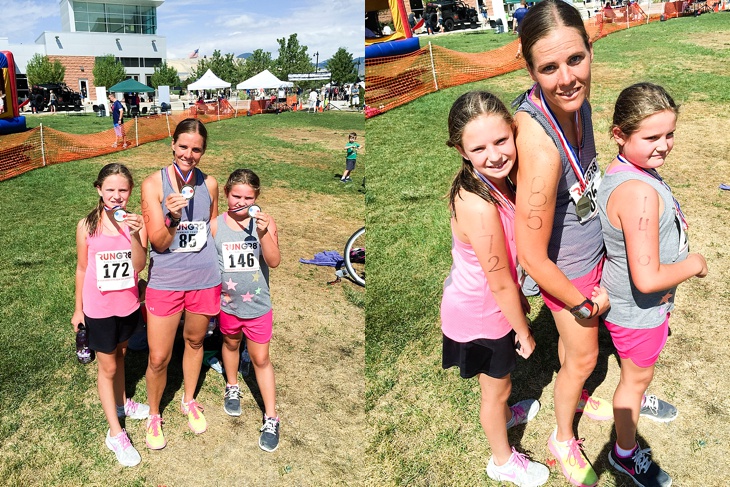
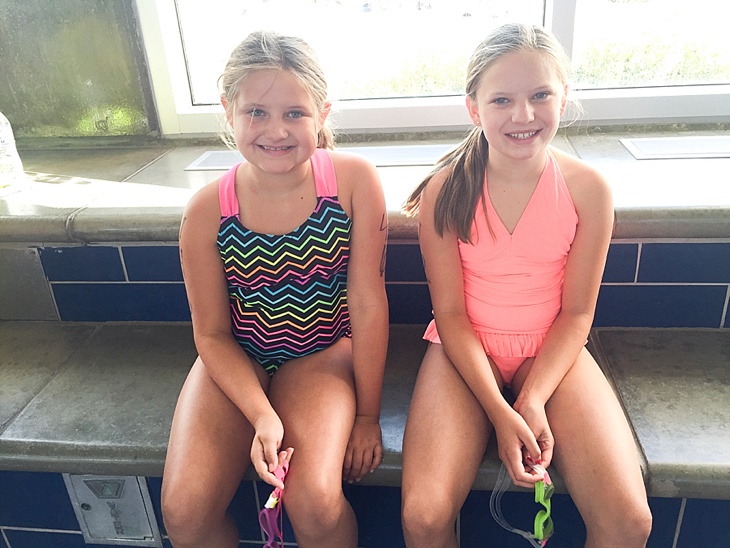
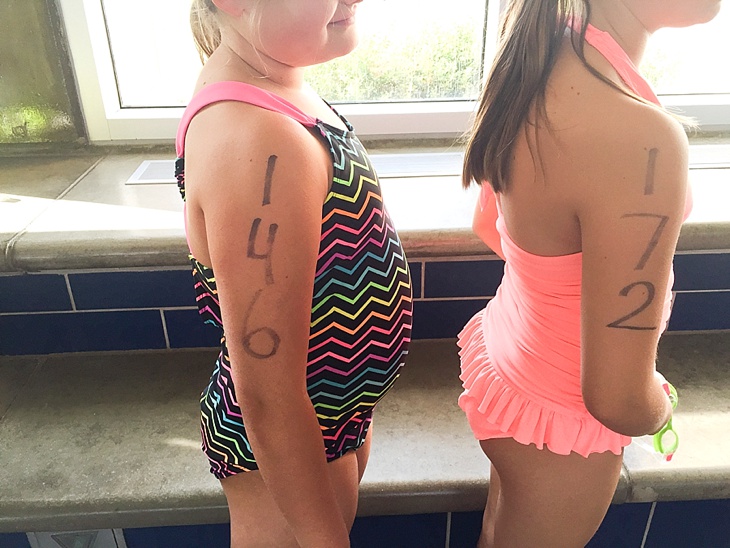
2016-04-21_00352016-04-21_00342016-04-21_00382016-04-21_0028The best part is when I finished, I still had my girls race to look forward to. Watching them stand in line, painfully nervous, but inching their way forward in the swim line anyway was incredibly inspiring. This was their first race of any kind and they had no idea what to expect. But they were doing it anyway. Once they got in the water, the nerves washed away and it was nothing but smiles after that. I was more nervous for them than I was for me. There’s one level of satisfaction accomplishing something like this myself. It’s an entirely different level of satisfaction watching my kids be brave and accomplish hard things.
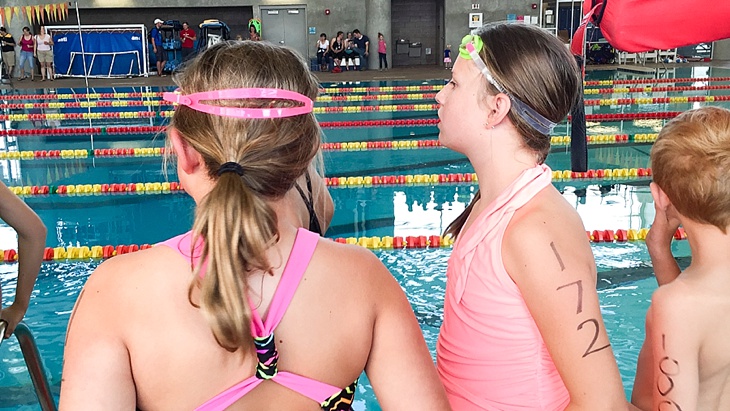
2016-04-21_00392016-04-21_00402016-04-21_00432016-04-21_00442016-04-21_00452016-04-21_00462016-04-21_00472016-04-21_00482016-04-21_00492016-04-21_00502016-04-25_00032016-04-25_00012016-04-21_00512016-04-21_00522016-04-21_00542016-04-21_00562016-04-21_00582016-04-21_00322016-04-21_00302016-04-21_0031

A day we’ll certainly never forget and one I’m grateful we got to do together. I’m looking forward to doing another triathlon in the future. Just have to talk myself into that dang swim again.

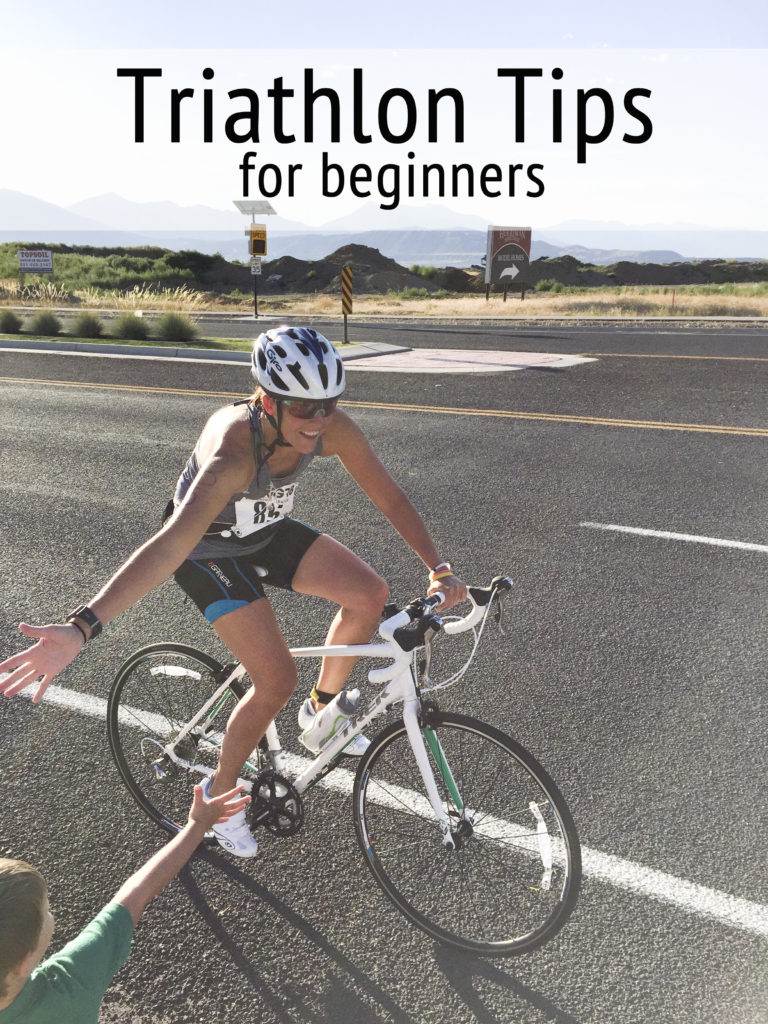
Before I did this race, I searched the internet for all the tips and advice I could find. I read blogs and articles and watched YouTube videos to get a sense for what the race would be like. I’m an over-preparer and I like to know what I’m getting in to. So I thought I’d pass on some of the things I learned. I’ve only done one triathlon. I’m obviously not an expert but sometimes tips from a beginner for beginners can be helpful. I also asked my brother-in-law and sister-in-law who also did their first triathlons last year to help me. Together we compiled a small list of tips.

triathlontips

**If this is your first triathlon, don’t stress too much about time. There’s a bit of a learning curve and the only way to really learn is to DO. I’m competitive and didn’t want to get a crappy time, but I also knew part of this process was enjoying it and learning what I could.

**Do at least a few training runs in the same clothes you’ll wear on race day. You’ll want to know ahead of time if certain clothing is going to bug. And everything changes when things are wet. Hello rashes.

**If your race is longer than 45 minutes to an hour, you’ll need some sort of nutrition. Whatever you plan to eat on race day is what you need to train with. Some foods upset people’s stomach when exercising. That’s not something you want to discover on race day. Trust me on that one. When you eat and how often is pretty personal based on how your body responds. I usually eat about 50 minutes in and then every 30-45 minutes after that depending on how I feel. If your body starts to tank, you waited too long. I like the Honey Stingers Energy Chews during the race.

Also figure out what you’ll eat before the race. Eat this same thing before training runs to make sure it settles well in your stomach. I like bagels, peanut butter on toast, or a protein bar. You’ll probably feel nervous the day of the race and may not feel like eating. Try to at least get something in your body for energy.

**Try to do a few training runs where you do 2 of the 3 events (called a brick). So bike and then immediately run. Or, if you have the time, do all three events for a training run. Map out a course and practice doing your transitions. It’s helpful to know what your body will feel like moving from one event to the next.

**Practice the transitions. Once you’ve trained a lot, it gets harder and harder to shave time off any one event. One place you can really save time is in the transitions. Lay your clothing out so it’s easy to find and get on in the order you need to get it on. Open the velcro on your shoes, put the helmet upside down with the buckle open, have your sunglasses open and glove straps undone, untie the laces on your running shoes, etc.

**Have something to wipe your feet off with after the swim. Putting socks on wet feet is stupid hard. Having a towel to dry them quickly is a huge help. If you run in sand after your swim, you may want a bucket of water to rinse your feet quickly and then wipe them off.

**I brought a towel to lay under all my gear so it wouldn’t get wet or muddy in the transition area

**Make sure you know the course–knowledge is power and can help eliminate confusion and keep your time down. Know what direction you are swimming, are there any turns, if so how many. In open water swimming make sure you practice sighting so you do not go off course and swim further then you have too. Drive the bike course so you know exactly where you are going and if there is a turnaround where it is. Drive the running course so you have an idea of where you are at all times and when you’re getting close to the end. PPPPPP (proper prior planning prevents poor performance).

**get to the race early so you can get a good spot for your bike. After the swim, you’re dripping wet and can be a little disoriented. It’s helpful to have your bike somewhere it’s easy to find.

**make sure you have good goggles that fit and don’t leak. You don’t want to have leaky goggles when you’re trying not to die swimming like Michael Phelps.

**if you’re doing an open water swim, try to practice swimming in open water. If you’re allowed to wear a wet suit on your swim, try practicing swimming in that as well. And, practice taking your wet suit off after the swim. I didn’t wear a wet suit in my race, but I’ve worn one at the lake before and I swear I almost dislocated a shoulder trying to get that thing off. Practice. (I’ve heard spraying yourself with cooking oil helps when you take it off–I have never done this so don’t take my word for it).

**If there’s a kids triathlon and you have kids, sign them up for the race as well. This was huge motivation to get me through my race quickly-ish so I could be there to watch theirs. And it was a day we’ll never forget.

If anyone has questions, please feel free to ask. I was so nervous about doing this and did a TON of research before I did. No question is dumb. I’m sure I had the same question before I did my race.


If you’ve ever thought about doing a triathlon, DO IT. If I can do it, trust me, you can too. Go get it!

Periscoping with Becky Higgins.

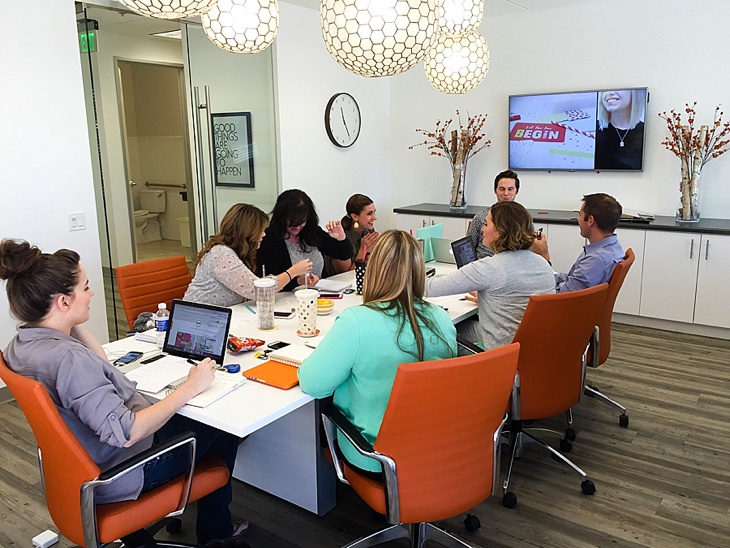
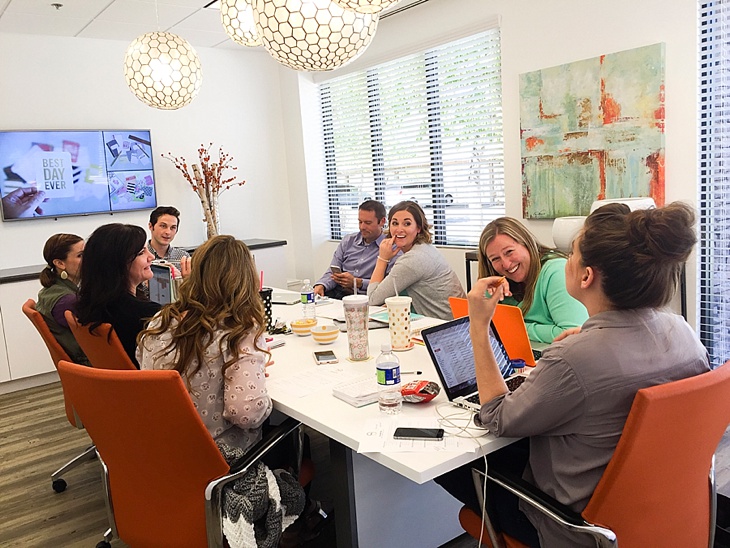
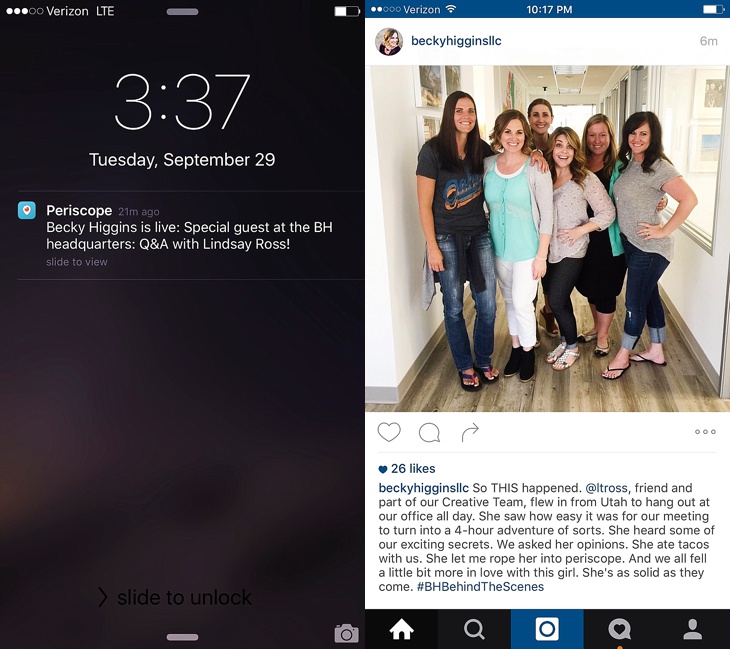
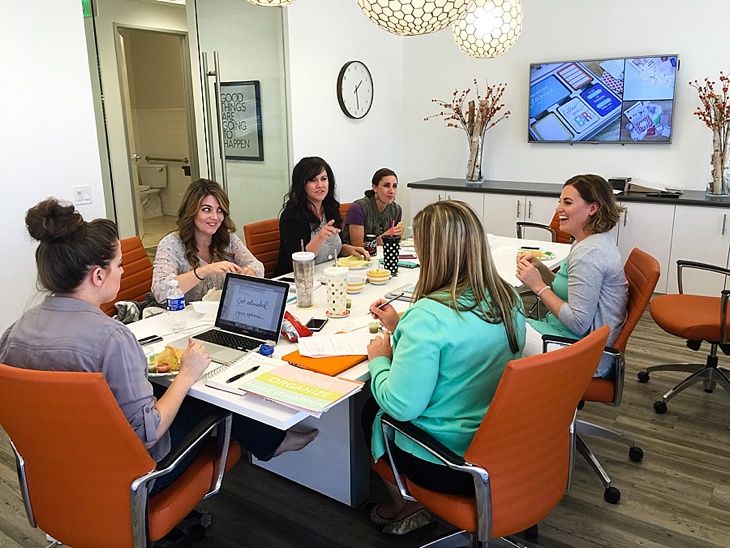
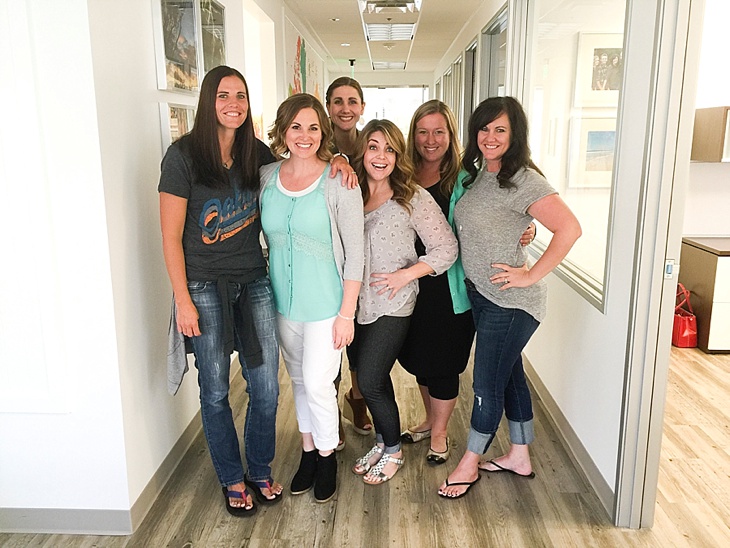
Last October I had a chance to take a quick trip to Arizona and spend a day at Becky Higgins office with her and her team.

If you’ve never heard of Becky, she’s the creator of Project Life.  I didn’t know her when I first found out about the Project Life system.  But it was just what I had been looking for to help me get my photos off my computer and phone and printed where my family could enjoy them.

Over time I connected with Becky via Instagram, was chosen to be on her 2015 Creative Team, worked at her booth for Pinners conference last November, and now manage her Pinterest account.  This is one of my favorite things about social media–the ability to make life-long friends.  We were complete strangers and now I consider her a dear friend.  And with her, I’ve made several more friends with women on her team who I connect with in ways I never imagined I could having just met someone.

Becky’s solid gold as is every single member of her team.  She’s incredibly creative, has a great sense of humor, and is a talented businesswoman who I have nothing but respect for.

I got the chance to see behind-the-scenes in the office, sit in on a team meeting, ask ANY questions I wanted to (invaluable to someone trying to run her own small business), and hang out with the BH team for a day.  Truly a day I’ll never forget and I’m nothing but grateful for them accepting me with open arms and making me feel like I belonged.

2016-04-11_00012016-04-11_00022016-04-11_00032016-04-11_00042016-04-11_00052016-04-11_00062016-04-11_00072016-04-11_00082016-04-11_00092016-04-11_00102016-04-11_00112016-04-11_00122016-04-11_00132016-04-11_00142016-04-11_00152016-04-11_00192016-04-11_00172016-04-11_00182016-04-11_00162016-04-11_0020

While I was there Becky talked me into being on Periscope with her.  I’m not sure there was an option to say No.  As you can see in the video I was wildly uncomfortable not knowing exactly what to expect.  But I managed to bumble my way through it.  Another great experience watching how things like that work within her company.  Becky’s great on video and completely comfortable doing it.  I learn so much just by watching how she does things.  She’s a great example of someone who gives, gives, gives and was more than willing to share her knowledge and great advice.
Surviving Cancer

On September 5, 2013, my friend Lisa received a devastating diagnosis.  A diagnosis that meant almost certain death.  Stage IV B, Plasmablastic non-Hodgkins Lymphoma.  That’s the stage next to “you’re dead”.  It doesn’t get much worse than the diagnosis she received.
cancer survivor

For those of you who’ve been around a while, you may remember Lisa from this interview in my Women of Inspiration series.

The first cancer doctor she met with said she’d be lucky if she lived 2 months.  They’d do their best to keep her comfortable but there really wasn’t much they could do.  Lisa’s response:  “I’m too young.  I’m not done living.  Figure something out”.  Twenty-four hours later she met with the same doctor.  He sent her immediately to LDS hospital where her grueling treatment and fight for life was to begin.

The outlook was bleak.  Survival would be nothing short of a miracle.  And I’m not using the word miracle lightly.  She basically got a death sentence.

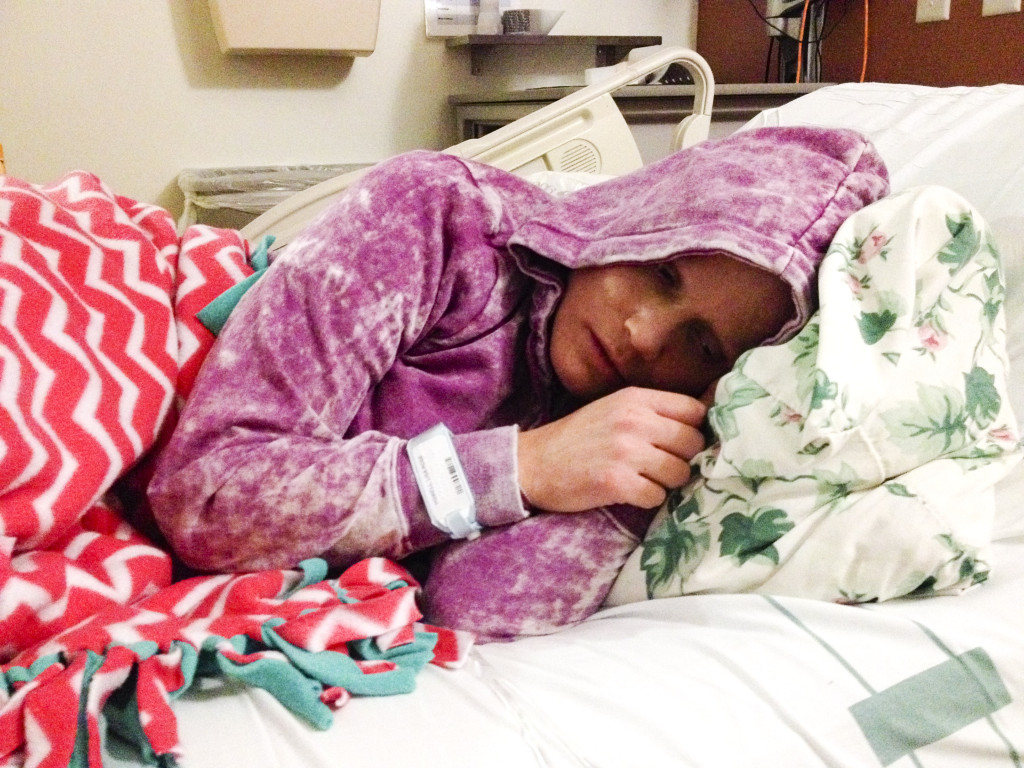
Over the next nine months Lisa went through 13 rounds of in-patient chemotherapy at LDS hospital.  For 6 days, she received chemo treatments 24 hours a day.  She then stayed in the hospital each time for another 6 to 10 days while she recovered.

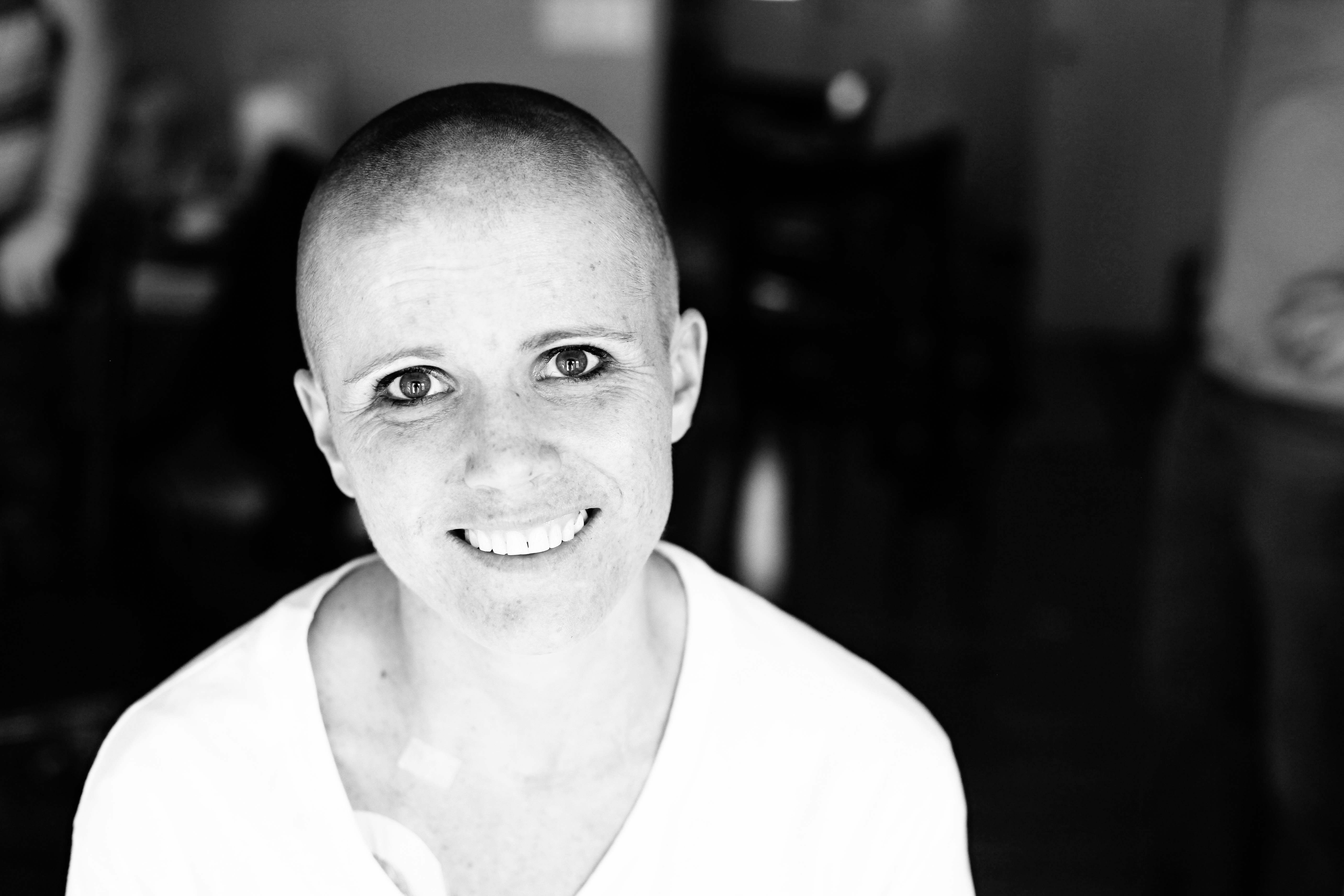
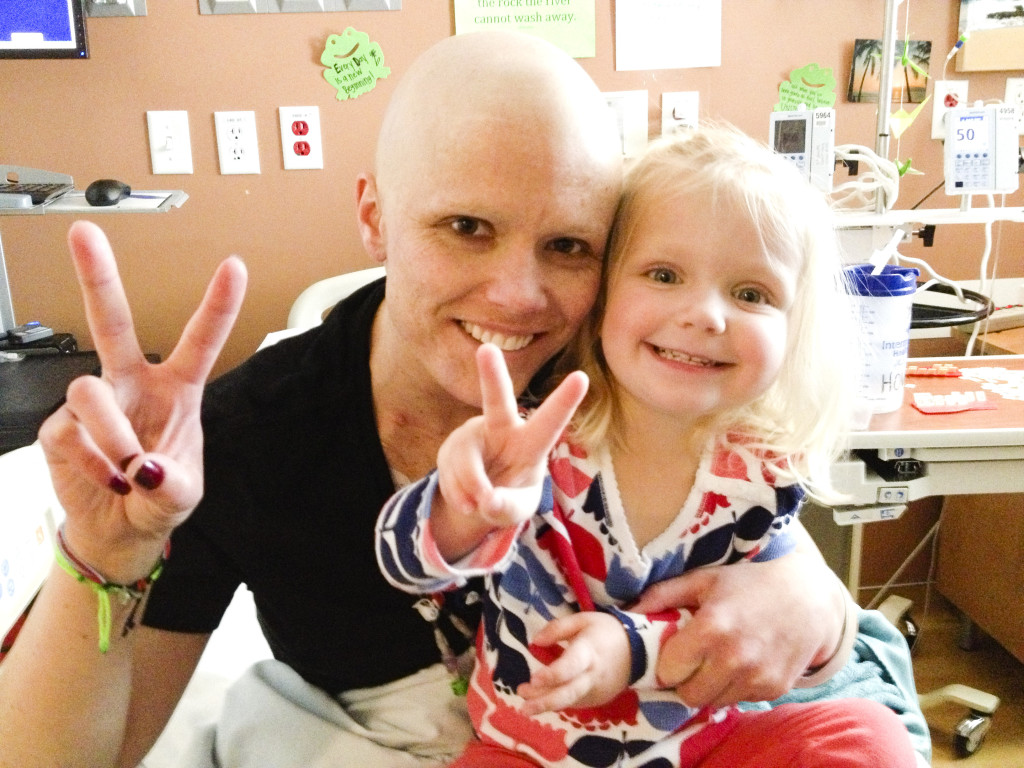
cancer treatmentcancer treatmentBecause she had lost control of most things in her life, she wanted to have control over when she lost her hair.  So she chose to shave it.  On September 27th of 2013 she planned what she now calls a hair funeral.  I asked if I could come document it.  Because documenting is what I do.  Just for her and her family to have.  Painful moments need documenting just as much as happy ones.  It was never really meant to be shared with the public.  But today she’s decided to share it.  To help bring awareness.  And hope.
Hopefully this will inspire anyone out there currently battling cancer or supporting and loving someone who is (pretty sure we ALL fall in to that category).

The Hair Funeral.

After the 13 rounds of chemo, she received one more round of high-dose of chemo (Beam chemotherapy) to kill all of her bone marrow.  On May 8, 2014 she had an autologous bone marrow transplant (a transplant using her own blood-forming stem cells).

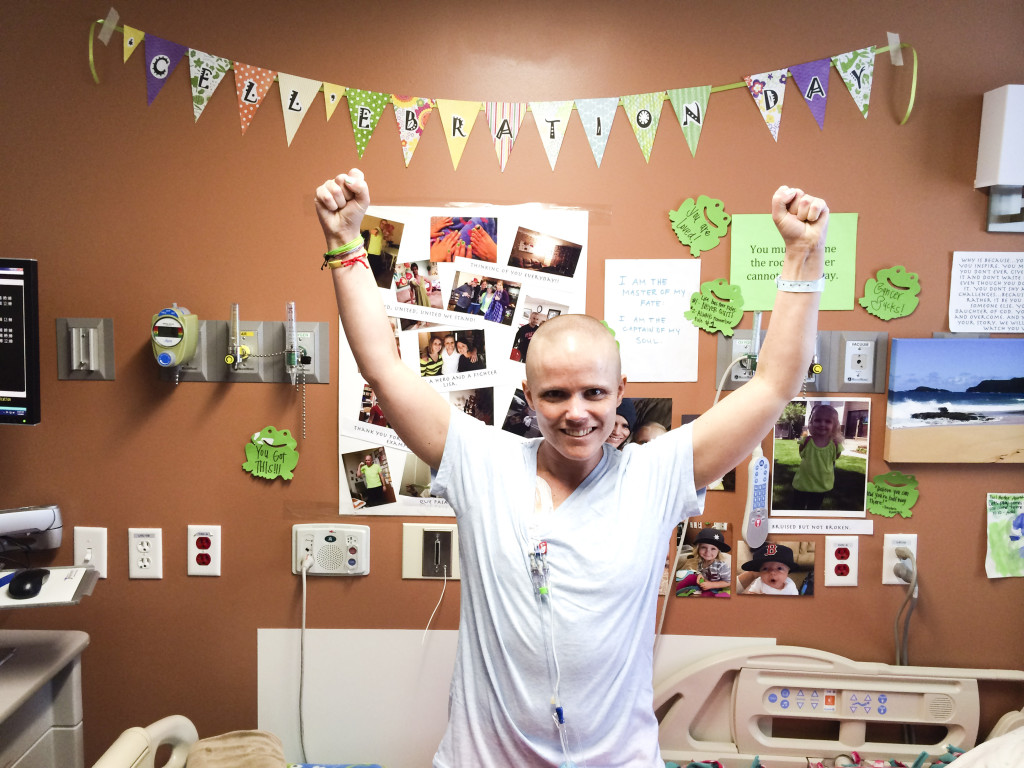
bone marrow transplant dayHer battle was more like a full-fledged war.  Sick isn’t even the right word.  Nearly dead many times is more accurate.

On August 16, 2014 Lisa was told their was NO evidence of disease in her body.  No cancer.  When she walked into the hospital the first time after she was diagnosed, there was no doubt she was capable of fighting as hard as any human has fought before for their life, but not many people  thought she’d be able to walk back out at the end of all this with NO disease.  And yet, she did.  Her response to all of this:  “You CAN do hard things when you have people that believe in you.”

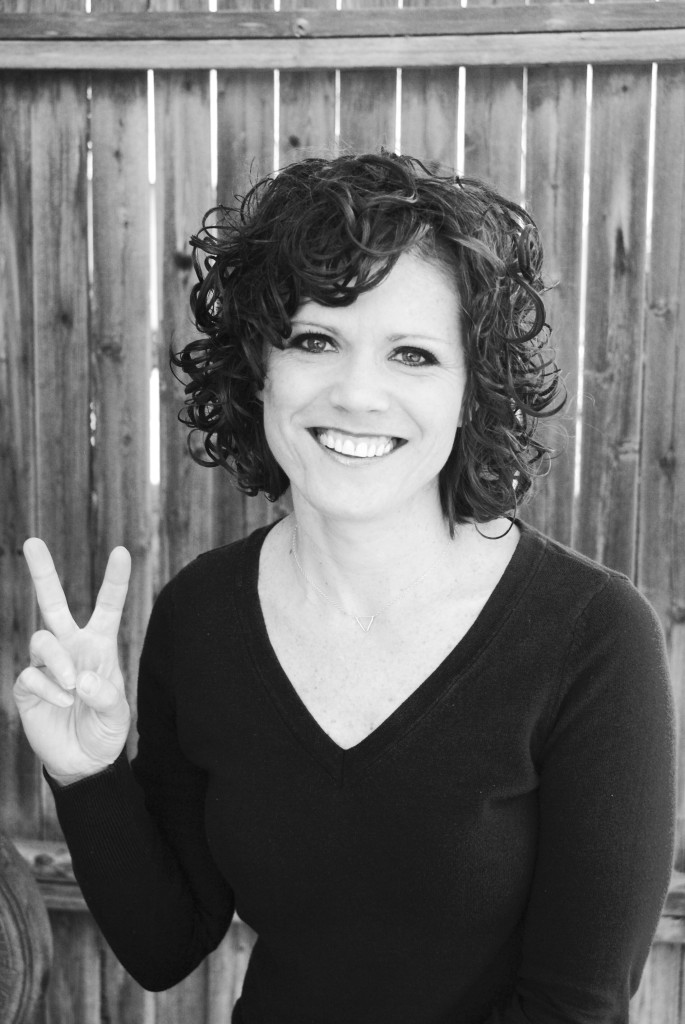
Can we just take a moment to appreciate that head of hair!!!!  It came back curly!

SONY DSC

Lisa has approached her life with a renewed will to LIVE.  In every aspect of her life.

She has since been nominated as a candidate for the Man & Woman of the Year fundraising campaign with LLS.  She accepted the nomination to team with the Leukemia and Lymphoma society to find a cure for blood cancers.  A cause that helped SAVE her life.

In an e-mail she recently sent to me she said: “Currently, there are over one million Americans battling a blood cancer.  Approximately every 3 minutes, someone new is diagnosed with blood cancer.  Every 10 minutes, someone dies from their cancer.  But there IS something we can do.  There are so many reasons to be proud to support LLS’s efforts, and dedication toward the fight against cancer.  Of the 81 new anti-cancer drugs approved by the FDA since 2000, 31 of them were initially developed for blood cancers.  So many of these drugs had funding from LLS and now show promise for treating other cancers and autoimmune disorders….

I’ve struggled with the “why” of all of this.  Not the “why did this happen to me,” but rather the “why am I so lucky to still be here when so many dear cancer friends aren’t”?  So, “why” am I still here? I believe I am here to DO. A lot of people can ask the question “what can I do”?  I believe the answer is to just DO SOMETHING.  I am owning my title of a cancer survivor and DOing something.  It is my turn to DO.  I am rallying with the LLS to find a cure. To end the suffering.  You go to war with people that have your back, people you believe in.  I believe in the LLS, because they believe in me. ”

Cancer sucks.  And Lisa’s trying to help find a cure.

If you’d be willing to team up with her (ANY amount makes a difference–truly) and LLS in finding a cure you can donate directly on her page HERE.

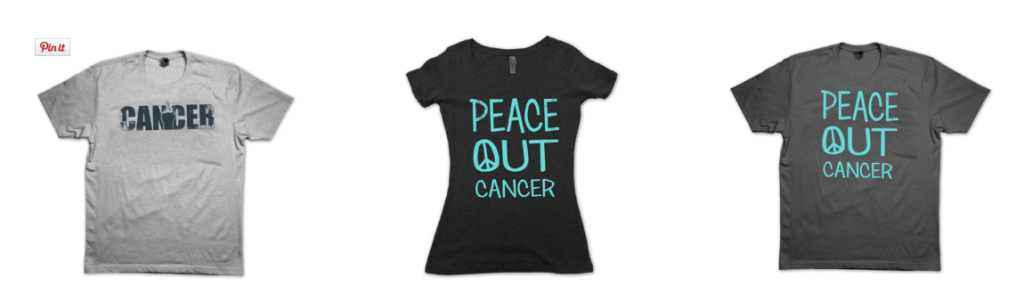
OR, you can purchase one of these ridiculously awesome t-shirts (that Lisa helped design) at this link HERE.  I got the cancer fight club shirt.  The sizes run a little small so keep that in mind when ordering.

Screen Shot 2016-03-25 at 8.18.48 PMScreen Shot 2016-03-25 at 8.19.00 PMScreen Shot 2016-03-25 at 8.19.14 PM

Join the cancer fight club!

A HUGE thank you to Lisa for her courage, her inspiration, and her vulnerability.  There was a lot of discussion before we posted this video.  It was not a rash decision.  But instead one with the hope of helping others.  And a hope of inspiring others to team up for the fight against cancer.  I tear up EVERYtime I watch it (and I’ve watched it a lot).  One of the most courageous battles I’ve ever witnessed.  I’m nothing but humbled to have been so close to such a sacred moment.

Peace out Cancer.  Glad you’re alive my friend.  Thanks for fighting every.single.day.

Related Posts Plugin for WordPress, Blogger...